Showing 18 Result(s)
Low-angle view of a modern quartz staircase with luminous highlights and subtle stone veining in a bright home interior.
Uncategorized

How to Design and Install a Quartz Staircase in 5 Steps

Installing a quartz staircase transforms ordinary vertical circulation into a luminous architectural statement, combining the durability of engineered stone with design flexibility that natural materials alone can’t match. Unlike traditional marble or granite stairs that require quarrying single slabs large enough to span each tread, quartz staircases use manufactured slabs that deliver consistent color, pattern, and thickness across every step, eliminating the variability that complicates installation and long-term maintenance.
The process requires precision templating, professional-grade adhesives, and mechanical anchoring …


Eye-level view of a modern urban plaza with natural stone pavers, a low retaining wall, and integrated greenery.
Uncategorized

How to Design Urban Landscapes with Natural Stone: A Step-by-Step Approach

Urban landscape design with natural stone transforms public spaces into durable, beautiful environments that serve communities for decades. The process involves strategic material selection, site analysis, and careful integration of stone elements like pavers, retaining walls, and decorative features into streetscapes, plazas, and green infrastructure. When executed properly, stone installations create cohesive urban environments that balance functionality with aesthetic appeal while …

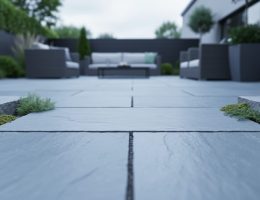
Bluestone pavers on an outdoor patio with visible stone texture and greenery between slabs, photographed in soft natural daylight.
Uncategorized

7 Best Natural Stones for Outdoor Patios of 2026, Tested and Reviewed

After testing seven natural stone options across diverse climates and use cases, we found that bluestone delivers the best balance of durability, slip resistance, and timeless aesthetics for most outdoor patios. Its dense composition withstands freeze-thaw cycles better than softer limestone, while its naturally textured surface offers superior traction compared to polished granite.
Choosing the right stone for your patio isn’t just about looks. We spent months evaluating how different materials perform under real-world conditions: how they handle foot traffic, weather extremes, staining from outdoor entertaining, and the …

Uncategorized

How to Use Pastry Stones for Professional-Grade Baking at Home

Baking pastry directly on a heated natural stone surface produces superior texture and crust development by drawing moisture from the dough while distributing heat evenly across the base. This centuries-old technique, now accessible to home bakers and professional kitchens alike, relies on dense stones like granite, marble, or soapstone that have been properly prepared, heated to precise temperatures between 450°F and 500°F, and maintained as dedicated baking surfaces.
The science is straightforward: stone’s thermal mass absorbs and radiates consistent heat, eliminating hot spots that plague metal baking sheets. When chilled…

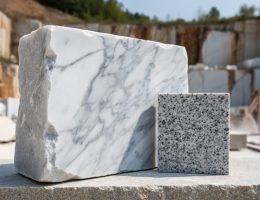
Close-up of a marble block with swirling white veins beside a granite sample, photographed in soft natural light with a blurred quarry background.
Uncategorized

What Are Geological Deposits? (And How Natural Stone Forms)

Geological deposits are accumulations of minerals, rocks, and organic materials that have formed over millions of years through natural processes like sedimentation, volcanic activity, and metamorphic transformation. These deposits are the source of every piece of natural stone used in construction and design, from the marble countertops in modern kitchens to the granite façades of historic buildings.
Understanding where natural stone originates matters for anyone specifying or purchasing stone products. The geological history of a deposit directly influences a stone’s color, pattern, durability, and performance …

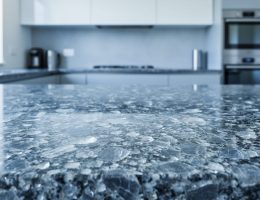
Close-up of a polished granite countertop showing detailed crystalline mineral texture in a clean kitchen setting.
Uncategorized

What Is Granite Chemical Resistance (and How Does It Perform)?

Granite’s chemical properties refer to how this igneous rock responds when exposed to acids, bases, solvents, and other reactive substances. Unlike many building materials, granite demonstrates exceptional chemical stability due to its crystalline structure and mineral composition, primarily quartz (20-60%), feldspar (65-90%), and mica (3-10%). This stability makes granite resistant to most household chemicals, industrial cleaners, and environmental pollutants that would damage limestone, marble, or synthetic surfaces.
Understanding granite’s chemical behavior matters because it directly affects longevity and maintenance…

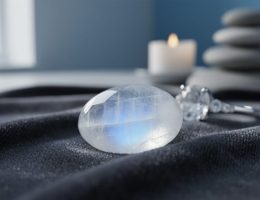
Close-up of a moonstone with a soft, floating glow on dark fabric, styled to evoke calm and reflective symbolism.
Uncategorized

What Is Moonstone Symbolism and Meaning (and Why Does It Matter in Natural Stone Applications)?

Moonstone symbolism refers to the spiritual, cultural, and metaphysical meanings attributed to this luminous gemstone across civilizations, most commonly representing intuition, feminine energy, new beginnings, and emotional balance. The stone’s distinctive adularescence, a soft glow that appears to float beneath its surface, has inspired centuries of symbolic interpretation connecting it to lunar cycles, divine feminine power, and inner wisdom.
For designers, architects, and consumers selecting natural stone materials in 2026, understanding moonstone’s rich symbolic heritage adds depth to aesthetic choices. This …

A handheld XRF analyzer testing a polished Carrara marble slab to verify its elemental composition.
Uncategorized

Why PMI Material Testing Can Save Your Stone Project from Costly Failures

PMI material testing, or Positive Material Identification testing, is a non-destructive analytical method used to verify the elemental composition of natural stone and ensure it matches specifications for a project. In the stone industry, PMI testing employs handheld X-ray fluorescence (XRF) analyzers to identify and quantify the elements present in stone materials within seconds, confirming their authenticity, detecting potential contaminants, and validating consistency across large shipments. This testing has become a crucial quality assurance tool for high-stakes projects where material integrity directly impacts durability, aesthetic …