
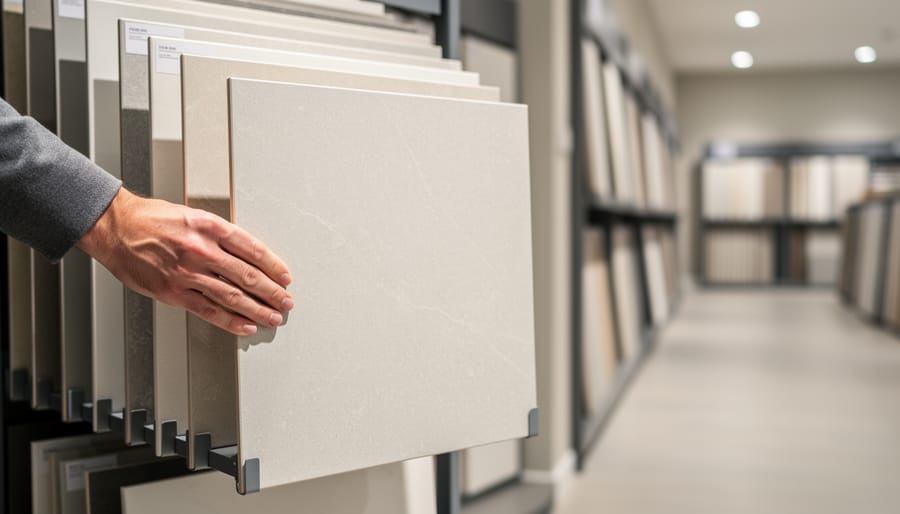
Choosing the right tile display system can have a major impact on how customers experience a retail showroom. Tiles are highly visual products, and customers often need to compare different colors, sizes, finishes, and textures before making a purchasing decision. A well-designed display system makes this process easier while helping retailers make better use of their available space.
Why Tile Display Matters in a Retail Showroom
A tile showroom is more than a place to store product samples. The way tiles are presented can influence how customers perceive the products and how easily they can compare different options.
Large tile samples can require significant floor and wall space. At the same time, customers need enough access to pull out samples, view them from different angles, and compare several products together. Poorly designed displays can make a showroom feel crowded and make product selection more difficult.
A practical tile display system should therefore balance product visibility, accessibility, storage capacity, and efficient use of space.
Common Types of Tile Display Racks
Sliding Tile Display Racks
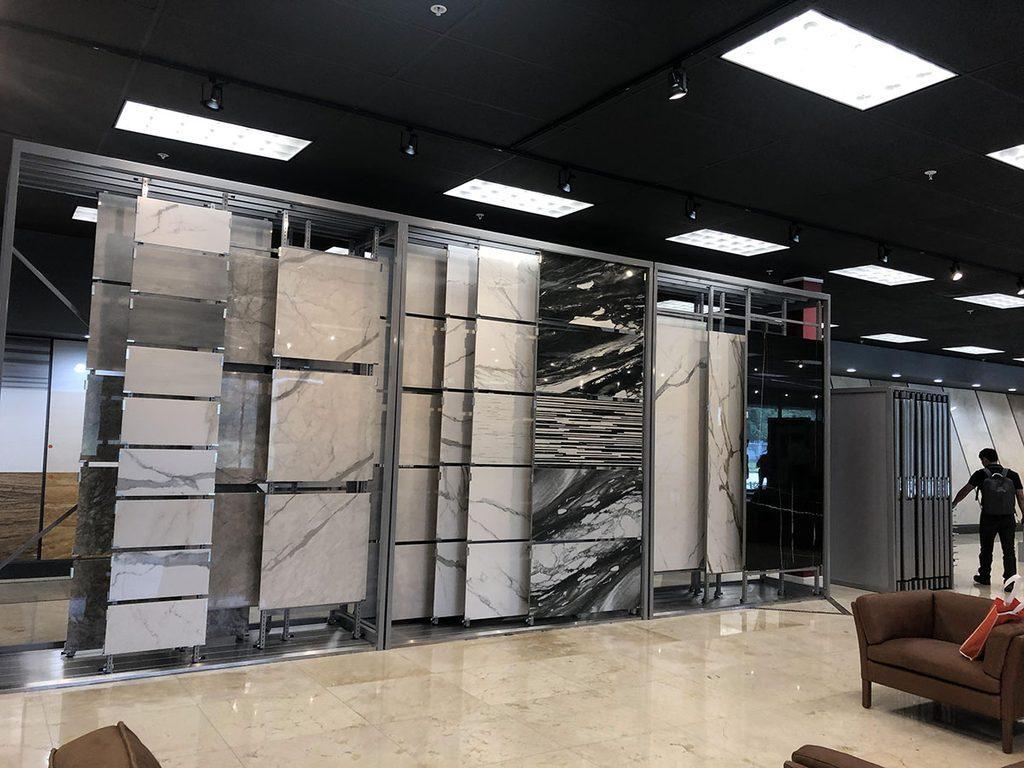
Sliding display racks allow multiple tile samples to be stored in a relatively compact area. Customers can pull individual panels forward to compare different products without taking up excessive floor space.
This type of display is particularly useful for showrooms with a large number of tile collections.
Pull-Out Tile Displays
Pull-out tile display racks are another practical option for displaying large tile samples. Individual panels can be pulled out from the rack, allowing customers to examine products more easily.
They can also help retailers organize different collections into clearly defined sections.
Rotating Tile Displays
Rotating displays can provide access to several tile samples from a single footprint. This makes them suitable for smaller showrooms where floor space is limited.
Because customers can rotate the display to view different samples, retailers can increase the number of products displayed without filling the showroom with separate racks.
Wall-Mounted Tile Displays
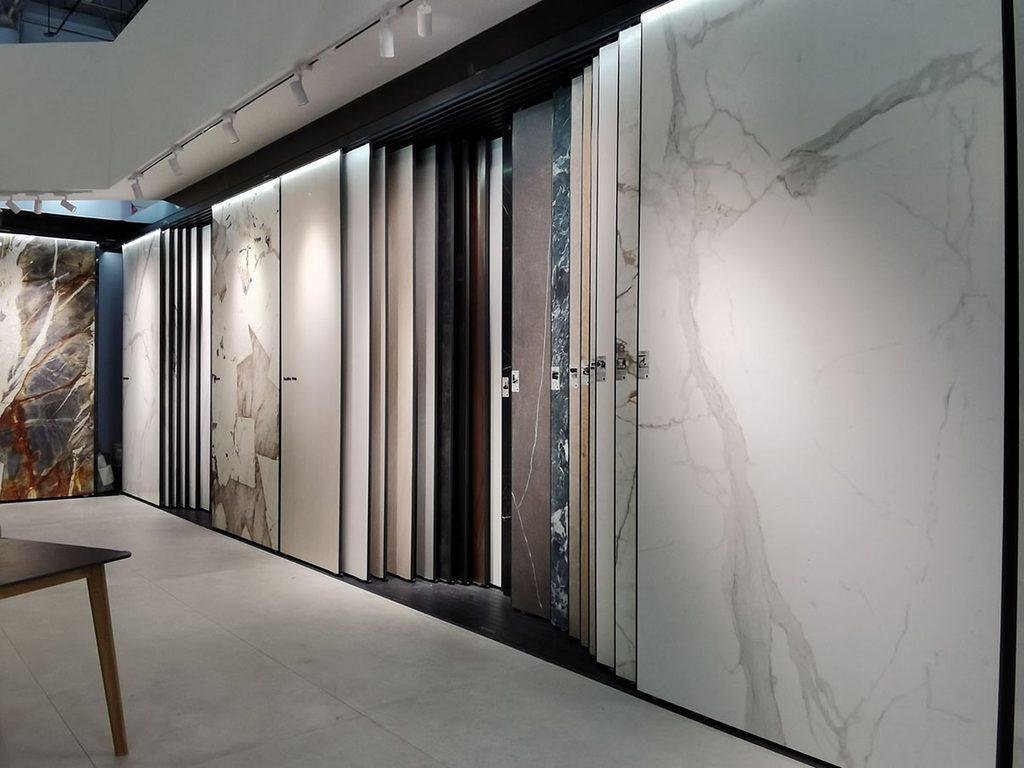
Wall-mounted systems make use of vertical space and can help keep walkways clear. They are often used to display selected collections, featured products, or tiles that retailers want customers to notice immediately.
How to Choose the Right Tile Display Rack
Consider Tile Size and Weight
One of the first considerations is the size and weight of the tile samples. Large-format tiles require stronger support and sufficient clearance for customers to handle them safely.
Retailers should check the rack’s load capacity and make sure the display system is designed for the specific tile formats being displayed.
Consider Available Floor Space
The available showroom space also plays an important role. A large showroom may have enough room for freestanding displays, while smaller retailers may benefit from wall-mounted or compact sliding systems.
Before selecting a display rack, it can be helpful to measure the available area and determine how much space should remain available for customer movement.
Consider the Number of Samples
A showroom displaying dozens or hundreds of tile samples needs a different solution from a small studio that only displays a limited collection.
High-capacity display systems can help retailers organize a larger product range without requiring additional floor space.
Consider Customer Accessibility
A display rack should not only maximize storage capacity. Customers also need to interact with the samples easily.
Displays that are difficult to open, pull out, or rotate may discourage customers from exploring the full product range. Easy access can create a more comfortable shopping experience and make product comparisons more efficient.
Customization Options for Tile Display Systems
Different tile retailers have different requirements. Some specialize in large-format porcelain tiles, while others focus on ceramic tiles, mosaics, or multiple product categories.
For this reason, customized display solutions can be useful. Dimensions, finishes, sample capacity, labeling systems, and installation methods can all be considered when planning a showroom display.
Retailers looking for tile display rack solutions can work with specialized manufacturers to develop display systems that match their showroom layout and product range.
How Better Displays Improve the Showroom Experience
A good display system can make a showroom easier to navigate and help customers compare products more efficiently. It can also create a cleaner visual environment by organizing different collections into logical sections.
From a retailer’s perspective, an efficient display system can make it easier for staff to introduce new collections, highlight featured products, and keep samples organized.
The best solution is not necessarily the rack that holds the largest number of samples. Instead, it should be the system that provides a practical balance between capacity, accessibility, appearance, durability, and available space.
Conclusion
Selecting the right tile display system requires more than considering the appearance of the rack. Retailers should evaluate tile size, sample quantity, showroom layout, customer accessibility, and future product requirements.
By choosing a display solution that fits the actual needs of the showroom, retailers can make better use of their space while creating a more convenient experience for customers.