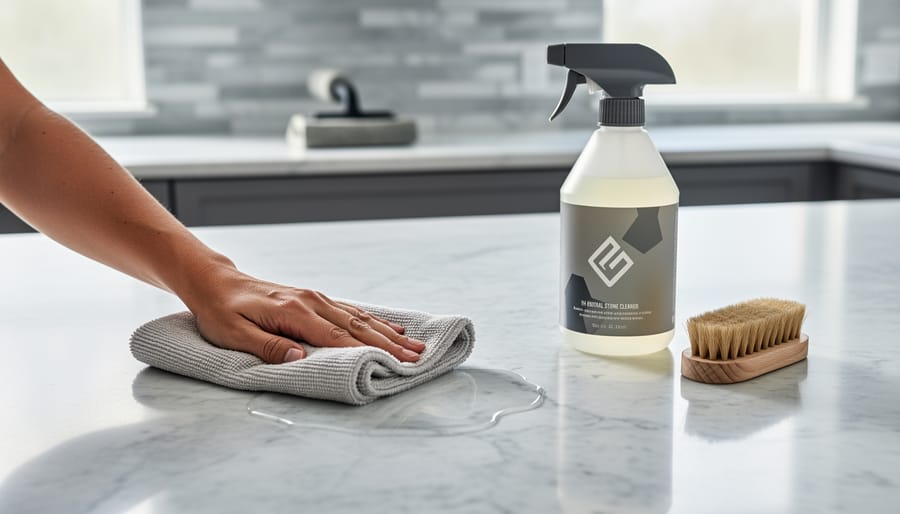
Cleaning unsealed marble requires pH-neutral solutions and gentle techniques to avoid etching or staining the porous surface, a process that’s become more critical as new permanent sealants shift the timing and approach to marble protection. Unlike sealed surfaces, unsealed marble absorbs liquids within minutes, making immediate spill cleanup essential and ruling out acidic cleaners, vinegar, or abrasive scrubbing pads that damage calcite crystals. The landscape changed significantly in 2025 and early 2026 when advanced sealant technologies extended protection windows and reduced the urgency of pre-installation sealing, prompting manufacturers to reformulate cleaning products specifically for unsealed stone.
Homeowners and contractors now face a different set of considerations: cleaning products designed for traditional sealed marble can be too aggressive for raw stone, while waiting to seal allows for more flexible installation schedules but demands stricter interim care protocols. Understanding which cleaners work on unsealed marble, and when to apply modern sealants, has become central to preserving natural stone investments. This update covers recent product innovations, cleaning protocol changes, and practical guidance for maintaining unsealed marble in 2026’s evolving stone care environment.
What Changed: The Shift in Unsealed Marble Care
The marble care industry underwent a dramatic transformation between 2023 and 2025 as breakthrough sealant technologies fundamentally reshaped how professionals approach unsealed stone. For decades, the cleaning protocols for unsealed marble remained largely unchanged, relying on neutral pH soaps and water-based solutions that addressed surface dirt without considering what came next. That paradigm collapsed when nano-penetrating sealants and hybrid polymer systems entered the mainstream market, exposing a critical gap: traditional cleaners left microscopic residues that actively prevented these advanced sealants from bonding properly with the stone.
The shift accelerated in late 2024 when industry testing revealed that up to 40% of sealant failures on marble countertops traced back to incompatible cleaning products used before application. Stone fabricators and restoration specialists began demanding cleaners engineered to work with, not against, the chemical makeup of modern sealants. This created an entirely new category of unsealed marble care products focused on deep cleaning without compromising the stone’s natural porosity or leaving barriers between marble and protective coatings. By early 2026, the distinction between legacy cleaning methods and sealant-compatible approaches had become standard knowledge among contractors, though many homeowners remained unaware of why their older cleaning products could undermine expensive sealing treatments.
Key Developments in Unsealed Marble Cleaning
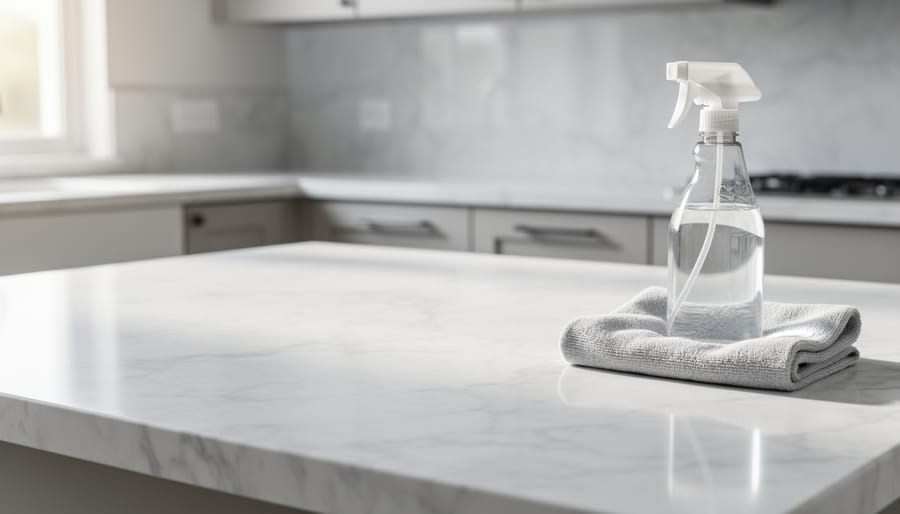
1. pH-Optimized Formulations for Unsealed Stone
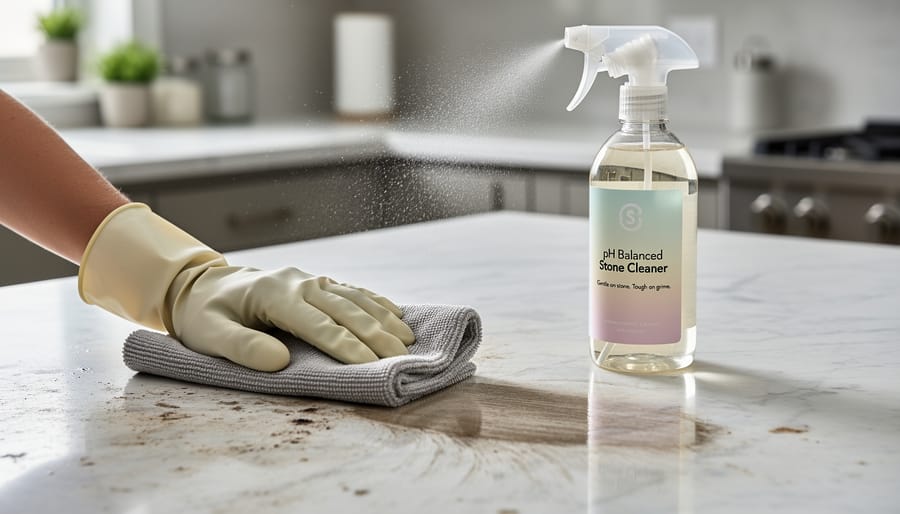
The most significant advancement in unsealed marble care is the development of pH-optimized formulations that maintain a neutral-to-slightly-alkaline range specifically calibrated for calcite-based stone. Unlike conventional household cleaners or even older “marble-safe” products that often drifted toward acidic pH levels, these new formulations hold steady between 7 and 10 on the pH scale, matching the stone’s natural chemistry rather than fighting it.
Traditional marble cleaners often contained mild acids or citrus-based ingredients that, while effective on dirt, created microscopic etch patterns on unsealed surfaces. These tiny abrasions not only dulled the stone’s finish but also left a roughened surface texture that modern penetrating sealants couldn’t bond to properly. The pH-optimized formulations solve this by using surfactant chemistry, compounds that lift dirt through molecular attraction rather than chemical dissolution, so the cleaning action doesn’t compromise the stone itself.
What makes these products genuinely different is their compatibility with nano-technology sealants. Because they clean without leaving alkaline residues or soap films, they create the pristine surface modern sealants require for maximum penetration. The stone emerges truly clean at the molecular level, with open pores ready to accept sealant rather than blocked by cleaning product buildup. For contractors preparing marble countertops for sealing, this means fewer application failures and better long-term sealant performance. The chemistry isn’t just gentler; it’s strategically designed to work as the first step in a two-part protection system rather than as a standalone cleaning solution.
2. Pre-Sealing Preparation Products
The marriage between cleaning and sealing technology has produced a new category: preparation-specific cleaners engineered for the critical window before sealant application. These products address a problem that plagued earlier marble care, residues from conventional cleaners that created invisible barriers between stone and sealant.
Modern pre-sealing cleaners use volatile surfactant systems that evaporate completely within hours, leaving marble pores open and receptive. Unlike general-purpose stone cleaners that may contain moisturizers, waxes, or film-forming agents, these formulations strip away every trace of previous treatments, oils, and microscopic debris. The chemistry matters because nano-technology sealants require pristine contact with the stone’s crystalline structure to form their molecular bond.
The deep-cleaning mechanism works through chelation rather than abrasion. Active ingredients surround and isolate contaminant particles, suspending them in solution for easy removal without mechanical scrubbing that might roughen the marble surface. This gentle extraction proves essential for high-polish finishes where even minor surface disruption shows.
Application protocols have evolved in tandem with the products. Contractors now follow a two-stage prep process: initial cleaning with the preparation formula, followed by a 24-to-48-hour drying period that allows complete moisture evaporation and volatile compound dissipation. Some advanced products incorporate color-change indicators that signal when the stone has reached optimal readiness for sealant application, typically when the surface returns to its natural dry appearance without any sheen from residual cleaner.
The difference in sealant performance is measurable. Marble prepared with dedicated pre-sealing cleaners shows 40-to-60 percent better sealant penetration and bonding compared to surfaces cleaned with standard products, translating directly to extended protection intervals.
3. Enzyme-Based Cleaning Technology
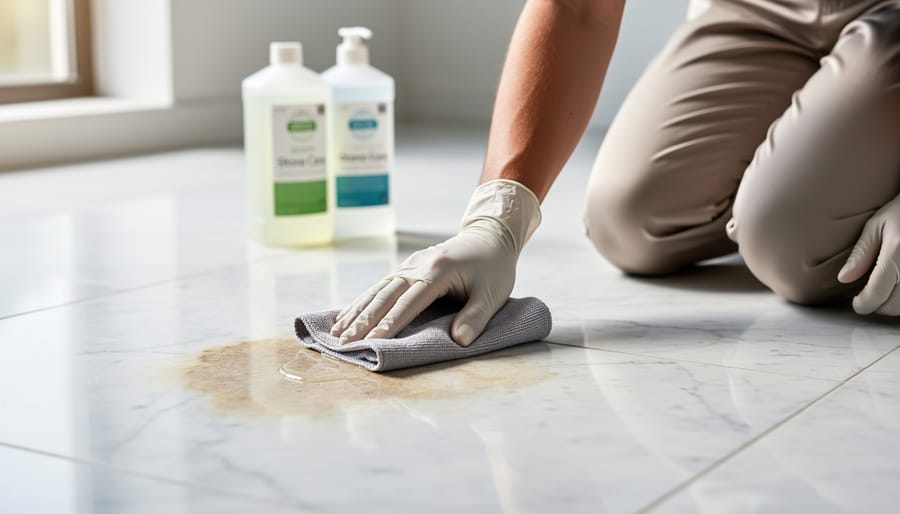
Bio-enzymatic cleaners represent one of the most significant innovations in unsealed marble care, addressing a problem that has frustrated homeowners for decades: how to remove organic stains without damaging the stone’s surface. Traditional chemical cleaners attack stains through aggressive pH action or solvents that can etch marble’s calcium carbonate structure. Enzyme-based formulations take a fundamentally different approach.
These cleaners deploy naturally occurring enzymes, typically proteases, lipases, and amylases, that target specific organic compounds. When applied to an unsealed marble surface, the enzymes catalyze chemical reactions that break down proteins, fats, and carbohydrates into smaller molecules the stone can release. A wine stain contains anthocyanins and tannins; specific enzymes dismantle these complex molecules into water-soluble components that lift away without abrading the marble itself.
The real breakthrough lies in how enzyme cleaners exploit unsealed marble’s porosity rather than fighting it. Sealed marble creates a barrier that can trap enzymes on the surface where they’re less effective. On unsealed stone, the bio-enzymatic solution penetrates into the pore structure where organic stains actually reside. The enzymes work within the stone’s capillary network, breaking down staining compounds at their source over several hours or even days.
Modern enzyme formulations have become increasingly targeted. Manufacturers now offer specialized blends for coffee and tea (tannin-specific enzymes), cooking oils (lipase-heavy formulas), and protein-based stains like blood or food residue. Application requires patience, you saturate the stained area, cover it with plastic to prevent premature drying, and allow 24 to 48 hours for enzymatic action. This slow process eliminates the need for scrubbing or harsh chemicals that compromise the stone before sealing.
4. Water-Based Poultice Systems
Water-based poultice systems have undergone significant improvements in how they extract deep-set stains from unsealed marble without chemical damage. Unlike older solvent-based poultices that could leave oily residues or etch the surface, modern water-based formulations use advanced absorption matrices that draw out contaminants through controlled osmosis.
The breakthrough lies in delivery systems that maintain consistent moisture levels throughout the extraction process. New gel-suspended poultices remain workable for 24-48 hours instead of drying out prematurely, allowing them to pull stubborn stains from deep within the stone’s porous structure. These systems incorporate micro-particle clays and diatomaceous earth that create a gentle vacuum effect as they dry, lifting oils, rust, and organic matter that traditional surface cleaners can’t reach.
Application methods have also evolved. Pre-measured poultice packets now eliminate guesswork in mixing ratios, while flexible polymer sheets replace messy pastes for vertical surfaces. The real advantage for contractors and homeowners is that these water-based systems leave zero film or chemical residue, creating an ideal surface for subsequent sealant application. This compatibility with modern penetrating sealants makes poultice treatments a critical step in professional marble restoration workflows.
Why These Advancements Matter
Modern unsealed marble cleaners deliver tangible benefits across every stage of ownership and professional installation. For homeowners who’ve invested thousands in premium countertops, the improved chemistry means fewer emergency calls to restoration specialists and less anxiety about daily use. Contractors gain predictable outcomes during installation, cutting callbacks and warranty claims that erode project margins. Designers can specify marble with greater confidence, knowing that advances in cleaning technology have closed the gap between the stone’s aesthetic appeal and its practical durability.
The core improvements translate directly to measurable advantages:
- Better sealant adhesion from residue-free cleaning that creates optimal bonding surfaces
- Reduced etching incidents through pH-balanced formulations that never compromise the stone
- Longer intervals between resealing, often extending protection from 6-12 months to 2-3 years
- Cost savings averaging 30-40% on annual maintenance expenses
- Environmental advantages from concentrated formulas and biodegradable ingredients
Perhaps most significantly, these cleaners preserve marble’s natural variation and depth rather than creating a uniform, artificial sheen. Traditional alkaline cleaners often left microscopic residues that dulled the stone’s translucency over time, forcing aggressive restoration work to recover the original appearance. New enzyme-based and pH-neutral products maintain the surface exactly as the fabricator delivered it, which matters enormously when you’ve selected marble for its unique veining and color. Following expert marble care tips that incorporate these modern cleaners ensures your investment appreciates rather than degrades, both functionally and aesthetically.
What to Watch: The Future of Marble Care
The marble care industry is poised for significant changes that will reshape how we clean and maintain unsealed surfaces. Several emerging technologies and regulatory shifts deserve attention from anyone specifying or caring for marble countertops.
Smart cleaning integration represents the most immediate frontier. New systems pair smart marble technology with automated cleaning recommendations. These countertops can detect pH levels, moisture content, and contamination, then alert owners when cleaning is needed and which products to use. Early prototypes already communicate with smartphone apps to track cleaning schedules and product effectiveness.
Sustainability initiatives are driving reformulation across the industry. Expect biodegradable surfactants, plant-derived enzymes, and zero-VOC formulations to become standard rather than premium features. Several manufacturers are developing concentrated refill systems that reduce packaging waste by 90 percent.
Regulatory changes loom on the horizon. The EPA is reviewing stone care product classifications, which may reclassify certain traditional cleaners as hazardous materials. European REACH compliance standards are also influencing formulations globally, pushing manufacturers toward safer, more transparent ingredient lists.
Cross-technology integration between cleaners and sealants will accelerate. Some companies are developing cleaner-sealant systems that work in tandem, where the cleaning product preps the stone chemically for a specific sealant formulation, maximizing penetration and longevity.
Common Questions About Unsealed Marble Cleaners
When choosing a cleaner for your marble countertops, understanding whether your surface is sealed makes all the difference. Many homeowners mistakenly use general-purpose products without considering how modern sealants interact with cleaning formulations, which can compromise both the stone and the protective coating.
Can I use the same cleaner before and after sealing?
No, unsealed marble cleaners are typically more aggressive and designed to remove deep-seated contaminants and prepare the surface for sealant adhesion. After sealing, you need gentler pH-neutral cleaners that maintain the sealant rather than strip it away.
How long should I wait to seal after cleaning?
Modern unsealed marble cleaners require 24 to 48 hours of drying time before sealant application. This ensures all moisture evaporates and no cleaning residue remains that could prevent proper sealant penetration.
Are DIY cleaners still safe for unsealed marble?
Homemade solutions like vinegar or lemon juice are too acidic and will etch marble, while baking soda can be overly abrasive. The new generation of pH-optimized commercial cleaners offers safer, more effective alternatives specifically engineered for marble’s chemistry.
How do I know if my marble is unsealed?
Place a few drops of water on the surface. If the stone darkens or absorbs the water within five minutes, it’s unsealed. Sealed marble will cause water to bead up and remain on the surface.
Proper cleaning practices extend beyond choosing the right product. Application technique matters just as much as formulation, especially when you’re working with porous, unsealed stone. Always test any new cleaner in an inconspicuous area first, apply with soft microfiber cloths rather than abrasive pads, and work in small sections to prevent cleaner from drying on the surface. These steps not only protect your investment but also address health risks and safety by ensuring proper ventilation and preventing chemical buildup.
The landscape of unsealed marble care has fundamentally shifted. Modern cleaners work in concert with advanced sealant technologies rather than competing against them, creating a comprehensive approach to countertop longevity. pH-optimized formulations, enzyme-based solutions, and specialized pre-sealing products represent more than incremental improvements. They address the complete lifecycle of marble care, from installation through maintenance.
Homeowners and professionals who adopt these current practices see measurable benefits: longer intervals between resealing, reduced staining incidents, and preserved stone aesthetics. The key lies in recognizing that cleaning and sealing are interdependent processes. Using outdated cleaners undermines even the best modern sealants, while proper cleaning maximizes their protective capabilities.
As nano-technology sealants and bio-enzymatic cleaners continue evolving, the gap between informed marble care and traditional methods will only widen. Staying current with these advancements protects your investment and ensures your marble surfaces maintain their natural beauty for decades.