
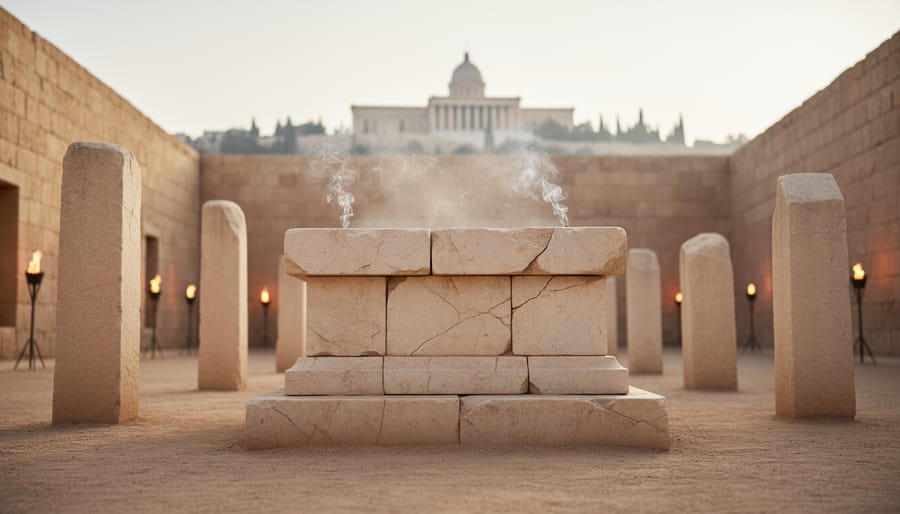
The Bible prescribes seven major festivals, known as the Lord’s appointed times or feasts, that ancient Israel observed annually through specific rituals often centered around stone altars, monuments, and sanctuaries. These biblical celebrations, Passover, Unleavened Bread, Firstfruits, Weeks (Pentecost), Trumpets, Day of Atonement, and Tabernacles, were commanded in Leviticus 23 and other scriptural passages, each marking agricultural cycles and commemorating God’s deliverance of Israel. What connects these seven feasts to stone construction traditions is their inseparable link to physical places of worship: massive stone altars where sacrifices occurred, rock-hewn monuments that marked covenant moments, and eventually the Jerusalem Temple itself, built from precisely cut limestone blocks.
Understanding these festivals reveals how ancient stone festivals established lasting patterns for using permanent materials in sacred spaces. The Israelites constructed stone altars at key festival sites, erected memorial pillars to commemorate significant events, and developed sophisticated masonry techniques for their places of worship. These practices weren’t merely functional. They represented permanence, covenant faithfulness, and the enduring nature of divine promises.
For architects, designers, and stone industry professionals working in 2026, the biblical festivals offer historical precedent for natural stone’s role in culturally significant installations. The same qualities that made limestone, granite, and other natural stones essential to ancient worship, durability, beauty, and symbolic weight, continue to drive their selection for monuments, houses of worship, and commemorative projects today. This exploration of the seven festivals demonstrates how stone construction traditions emerged from sacred observance and influenced architectural practices across millennia.
Why Stone Mattered in Biblical Festival Traditions
In ancient Hebrew culture, stone held profound symbolic and practical significance that extended far beyond construction. The permanence of stone made it the material of choice for anything meant to endure, altars, monuments, and memorial markers that would outlast generations.
Stone served as a witness. When the Israelites erected stone pillars or altars, these structures became physical testimony to covenants, divine encounters, and significant events. Unlike wood or clay that deteriorated, stone remained, telling the story to future generations who might otherwise forget.
The durability of natural stone also reflected divine permanence. When God’s commandments were inscribed on stone tablets, the material itself conveyed a message: these words were eternal, unchanging, and foundational. Similarly, stone altars represented the enduring nature of worship and sacrifice.
Hebrew culture specifically valued unhewn stone, rocks used in their natural state without iron tools, for sacred purposes. This requirement acknowledged that human manipulation could not improve what God created. The rough, unpolished surface of these stones stood in deliberate contrast to the elaborate stonework of pagan temples.
This reverence for stone’s lasting qualities meant that festivals commemorating pivotal moments naturally incorporated stone elements, ensuring that both the celebration and its meaning would remain tangible reminders across centuries.
How These Seven Festivals Were Selected
The seven festivals featured here represent the major appointed feasts explicitly commanded in Levitical law, specifically Leviticus 23, which establishes them as permanent ordinances for Israel. These aren’t arbitrary selections, each festival connects directly to stone construction, altars, or memorial practices documented in Scripture.
Three primary criteria determined inclusion:
- Direct biblical mandate in the Torah with specific observance instructions
- Documented connection to stone altars, monuments, or construction practices
- Historical significance verified through multiple scriptural accounts and Jewish tradition
- Clear evidence of physical stone infrastructure in temple or commemorative contexts
Each festival required stone elements for proper observance, from the altar offerings at Passover to the stone ovens used for preparing unleavened bread (similar in principle to a modern baking stone) during Chag HaMatzot. The connection between these celebrations and stone wasn’t coincidental. Stone represented permanence, witness, and durability, essential qualities for festivals meant to be observed throughout generations. Temple worship centered on massive stone altars, and commemorative stones marked pivotal moments in Israel’s journey, making these seven festivals natural examples of how ancient peoples integrated natural stone into their most significant religious observances.
1. Passover (Pesach), The Foundation Stone of Deliverance
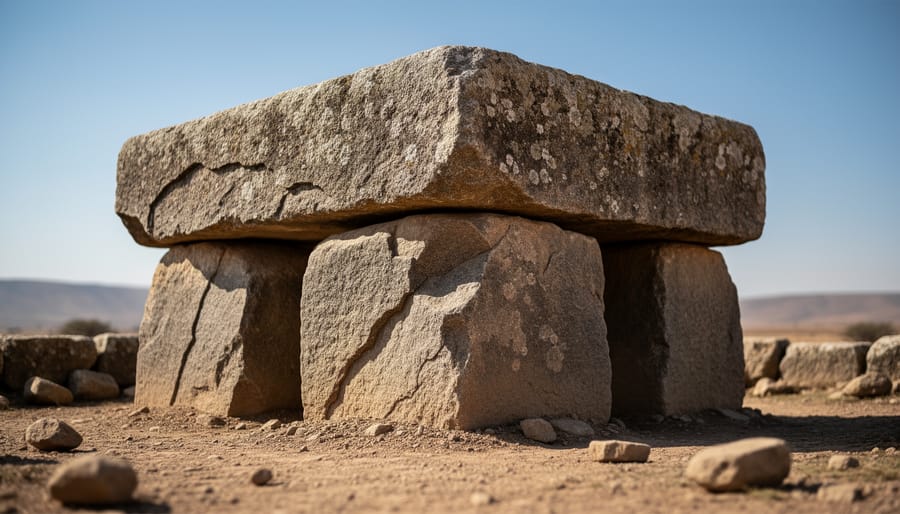
Passover commemorates Israel’s deliverance from Egyptian slavery, when God commanded each household to sacrifice a lamb and mark their doorposts with its blood. This pivotal event, recorded in Exodus 12, established not only a perpetual memorial but also specific requirements for stone altar construction that would govern its observance for generations.
The original Passover preceded Israel’s flight from Egypt, but subsequent celebrations centered on stone altars where lambs were sacrificed. Exodus 20:24-25 commanded altars be built of unhewn stone, stones untouched by iron tools, preserving their natural state. These uncut stones symbolized the uncorrupted nature of worship and the permanence of God’s covenant. During temple periods, thousands of Passover lambs were slaughtered on Jerusalem’s stone altar, their blood poured at the altar’s base according to Levitical requirements.
When Israel crossed the Jordan River into Canaan, Joshua erected a memorial of twelve stones taken from the riverbed. These stones, one for each tribe, created a permanent witness to God’s deliverance, a physical reminder that would prompt future generations to ask about their meaning. Joshua 4 describes how these memorial stones were set up at Gilgal, establishing a tangible connection between the Exodus deliverance and entry into the promised land.
The stone altar on Mount Ebal, built according to Deuteronomy 27, provided another permanent structure for Passover observances after entering Canaan. These uncut stones bore witness to the covenant between God and His people, creating lasting monuments that survived long after temporary wooden structures decayed. The durability of stone made it the ideal material for commemorating an event meant to be remembered “throughout your generations as an ordinance forever.”
2. Unleavened Bread (Chag HaMatzot), Seven Days of Remembrance
Unleavened Bread begins immediately after Passover and extends for seven days, commemorating Israel’s hurried departure from Egypt when they had no time to let bread dough rise. This festival required removing all leaven from homes and eating only unleavened bread throughout the week, a physical act of remembrance that shaped daily life and required specific infrastructure.
The preparation of matzah during this festival relied heavily on stone. Stone ovens provided the intense, dry heat necessary to bake unleavened bread quickly, preventing any fermentation. These ovens, built from stacked fieldstone or carved from rock, could reach temperatures exceeding 800 degrees Fahrenheit. The stone’s thermal mass retained heat evenly, producing the characteristic crisp, flat bread without raising agents. Many families maintained dedicated stone baking surfaces that were kept scrupulously clean and free from any trace of leaven.
The festival also required daily offerings at the stone altar. The first and seventh days were treated as sabbaths with special assemblies and sacrifices. Throughout the week, burnt offerings and grain offerings were presented on the altar, two young bulls, one ram, and seven male lambs each day, along with their accompanying grain offerings. The altar’s stone construction withstood the constant fire and blood of these repeated sacrifices, its unhewn stones serving as the permanent foundation for temporary observances.
This seven-day celebration transformed ordinary stone infrastructure into sacred space, demonstrating how durable materials supported extended religious observance.
3. First Fruits (Yom HaBikkurim), Harvest Offerings at the Stone Altar
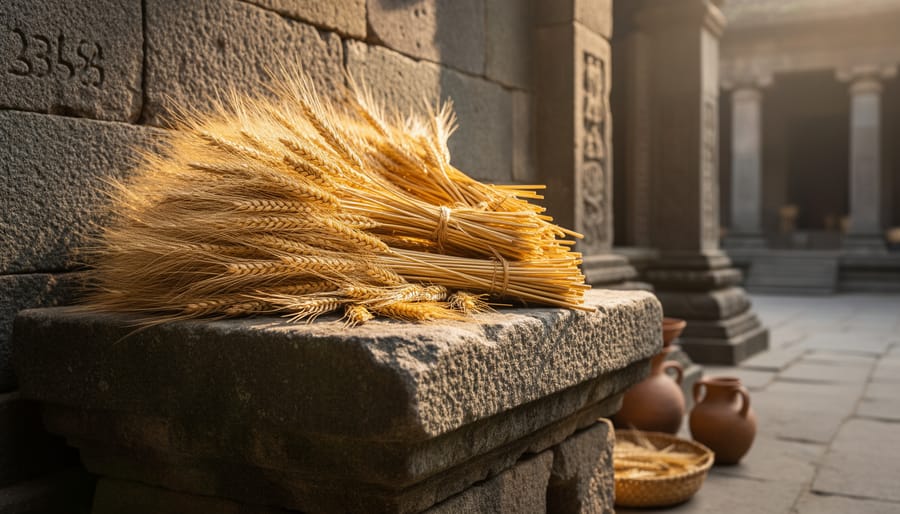
The First Fruits festival marked the beginning of the barley harvest with a special offering brought to the temple’s stone altar. Celebrated during the spring harvest season, this agricultural feast required worshipers to present a sheaf of the first grain harvested to the priest, who would wave it before the Lord at the altar constructed from natural stone.
The ceremony centered on the temple’s main altar, a massive stone structure built according to specific dimensions outlined in Exodus. This altar stood in the outer court and received the grain offerings alongside prescribed animal sacrifices. The stone platform elevated these offerings, creating a dedicated space where agricultural produce met sacred ritual. The grain itself was often parched in fire upon the altar’s stone surface, transforming the raw harvest into an acceptable offering.
Temple worship during First Fruits involved multiple stone architectural elements. Worshipers approached through stone-paved courts, ascending stone steps to reach the altar area. The priests worked at stone tables where offerings were prepared, and the grain was stored temporarily in stone chambers built into the temple complex walls.
The festival’s agricultural focus made it particularly relevant to Israel’s relationship with the land. By bringing the earliest harvest to a permanent stone structure, worshipers acknowledged that their seasonal crops relied on divine provision. The stone altar represented stability and permanence in contrast to the changing agricultural cycles, a solid foundation for expressing gratitude before the full harvest arrived.
4. Pentecost (Shavuot), The Festival of Weeks and Stone Tablets
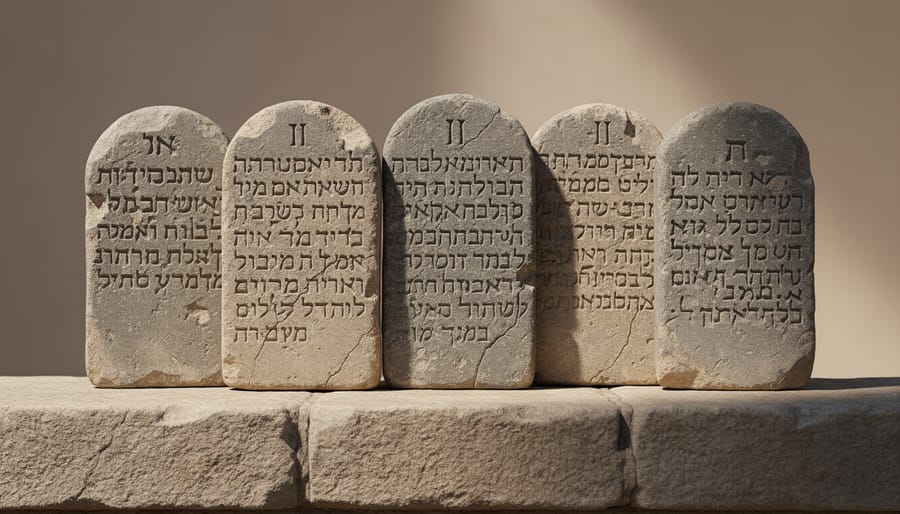
Pentecost, called Shavuot or the Festival of Weeks, marked the completion of the spring harvest cycle seven weeks after First Fruits. Jewish families brought their finest wheat offerings to the temple altar, celebrating both agricultural abundance and the covenant established at Mount Sinai. This dual-purpose festival uniquely connects harvest thanksgiving with the most significant stone moment in biblical history, when God inscribed the Ten Commandments directly onto stone tablets with His own finger.
The choice of stone as the medium for divine law carries profound meaning. Unlike papyrus that crumbles, clay that cracks, or wood that rots, stone endures across generations without modification. Moses received two tablets of testimony cut from the mountain itself, written on both sides with commandments that would govern Israel forever. When Moses shattered the first set after witnessing the golden calf incident, God commanded him to cut replacement stones and return to Sinai, where the law was rewritten in stone a second time, emphasizing permanence even after human failure.
During Shavuot observance, priests offered two loaves of leavened wheat bread at the stone altar, along with animal sacrifices specified in Leviticus 23. The temple’s massive stone altar accommodated multiple simultaneous offerings as families from throughout Israel brought their harvest gifts. These stone structures weren’t merely functional, they represented the meeting point between heaven and earth, where agricultural blessings and moral law intersected. The festival reminded worshipers that just as their physical sustenance came from God’s provision, their spiritual foundation rested on law written in stone, designed to last as long as the nation itself existed.
5. Trumpets (Yom Teruah / Rosh Hashanah), Memorial Stones and New Beginnings
The Festival of Trumpets, observed on the first day of the seventh month, served as both a memorial and a call to spiritual renewal. While the festival itself centered on trumpet blasts and sacred assembly, the concept of “memorial” (Hebrew: zikaron) directly connected to the stone monuments that marked pivotal moments in Israel’s history.
Throughout Scripture, significant spiritual renewals were accompanied by the erection of stone memorials. When Joshua led Israel across the Jordan River, he commanded twelve stones to be taken from the riverbed and set up at Gilgal as a permanent witness to God’s faithfulness. These memorial stones weren’t decorative, they were substantial, requiring physical effort to transport and position, ensuring they would stand for generations.
The practice continued during national renewals. When Samuel led Israel in repentance at Mizpah, he took a single stone, set it up between Mizpah and Shen, and named it Ebenezer, “stone of help”, declaring, “Thus far the Lord has helped us.” This commemorative stone marked a turning point in the nation’s spiritual life.
Stone memorials functioned as teaching tools. Parents would explain to their children what the stones meant, creating intergenerational connections to past deliverances and covenant renewals. The Festival of Trumpets, with its emphasis on remembrance and new beginnings, embodied this same principle, looking back at God’s faithfulness while anticipating future redemption. The enduring nature of stone perfectly symbolized the permanence of divine promises and the lasting impact of spiritual transformation.
6. Day of Atonement (Yom Kippur), The Stone Foundation of Reconciliation
Yom Kippur stands as the holiest day in the biblical calendar, a solemn fast when the high priest alone could enter the Most Holy Place to make atonement for the entire nation. The festival’s rituals were inseparable from the temple’s stone infrastructure, particularly the massive altar of burnt offering and the rock foundation beneath the Holy of Holies.
On this day, the high priest performed a series of blood sacrifices at the bronze-covered stone altar in the temple courtyard. He first sacrificed a bull for his own sins, then a goat for the people’s transgressions. The altar’s construction followed strict specifications: a large stone structure with horns at each corner where blood was applied. Archaeological evidence from Jerusalem’s Temple Mount reveals foundations built from massive limestone blocks, some weighing several tons, creating a platform strong enough to support the altar’s constant use.
The climax of Yom Kippur occurred inside the temple’s innermost chamber. The Holy of Holies sat atop bedrock, the temple was built directly on Mount Moriah’s stone summit, believed to be where Abraham prepared to offer Isaac. This natural rock foundation symbolized God’s unchanging nature and the permanence of the covenant. The high priest passed through stone walls several feet thick to reach this sacred space, sprinkling blood on the mercy seat to complete the atonement ritual.
The temple’s stone architecture served both practical and theological purposes. Limestone walls provided fireproof protection for continuous altar fires, while the rock foundation represented an unshakable spiritual reality. Even the pavement stones in the temple courts were carefully selected and fitted, creating a lasting structure worthy of Israel’s most sacred observance. This emphasis on permanent stone construction for worship spaces established a pattern that influences religious architecture to this day.
7. Tabernacles (Sukkot), Temporary Shelters on Permanent Foundations

Tabernacles, Sukkot in Hebrew, represented the final harvest festival of the biblical year, a seven-day celebration commanded in Leviticus 23:33-43. Unlike the permanent stone structures of the temple, this festival required families to construct temporary booths from tree branches, commemorating Israel’s forty years dwelling in wilderness shelters. Yet even these fragile structures found their foundation in stone.
The festival centered on the temple courts, where massive stone altars received daily burnt offerings and grain sacrifices. Each morning, priests carried water from the Pool of Siloam in golden vessels to pour over the stone altar, a ritual marking both harvest thanksgiving and prayers for winter rains. The courtyard’s fitted stone pavement accommodated thousands of worshippers who brought offerings to the altar throughout the week.
These temporary booths, though built from palm fronds and willow branches, were often erected in temple courtyards or on rooftops supported by stone walls. The contrast was deliberate: fragile shelters reminded worshippers of dependence on God, while the enduring stone foundation beneath their feet testified to His unchanging faithfulness. Families decorated their booths with harvest fruits and celebrated with the same sacred stone implements used for altar service.
The festival concluded with an eighth day of solemn assembly, when additional offerings were brought to the stone altar. This final day transformed Sukkot from an agricultural celebration into a profound spiritual memorial, temporary harvest shelters built upon the permanent stone infrastructure that anchored Israel’s worship, demonstrating how passing seasons of celebration required lasting foundations to endure.
Stone Altars and Monuments: Construction Specifications from Scripture
Biblical instructions for altar construction reveal surprisingly specific technical requirements that governed sacred stone structures. Exodus 20:25 commands that altars built of stone must use “unhewn stones”, natural stones not touched by iron tools. This requirement preserved the stone’s original form, emphasizing that human skill shouldn’t improve upon God’s creation in worship contexts.
Deuteronomy 27:5-6 reinforces this standard when instructing Israel to build an altar on Mount Ebal, specifying “whole stones over which no man has wielded an iron tool.” The Hebrew term for these stones (avanim shlemot) literally means “complete stones” or “perfect stones,” referring to their uncut, natural state. Construction required careful selection rather than cutting, builders chose appropriately sized field stones that fit together without shaping.
Memorial stones (Hebrew: eben) erected to commemorate significant events followed different standards. Genesis 28:18 describes Jacob setting up a single pillar stone, while Joshua 4:20 details twelve stones arranged together at Gilgal. These monuments prioritized visibility and durability over specific dimensions, though they typically used substantial local stone that wouldn’t easily topple.
The principle of using natural, unmodified stone for sacred purposes connects to modern stone memorial design approaches that emphasize material authenticity. Contemporary memorials and commemorative installations often showcase stone in its most natural state, allowing inherent grain patterns, color variations, and surface texture to speak without excessive finishing, a design philosophy rooted in these ancient construction practices.
Common Questions About Biblical Festivals and Stone Traditions
Why were altars required to be made of unhewn stone?
Exodus 20:25 specifically commanded that altars be built from natural, uncut stones because using tools on the stone would defile it. This requirement emphasized approaching God with materials in their created state, untouched by human pride or craftsmanship, keeping the focus on worship rather than human achievement.
What types of stone were commonly used in biblical festivals?
Limestone was the most abundant stone in ancient Israel and formed the primary material for altars, temple construction, and memorial pillars. Basalt appeared in northern regions, while harder stones like granite were occasionally transported for significant structures, though local fieldstone served most memorial purposes.
How were memorial stones erected during festival commemorations?
Memorial stones were typically set upright as pillars or stacked to form cairns, often at sites of divine encounters or covenant renewals. Joshua’s twelve stones at Gilgal exemplify this practice, large stones carried from the Jordan River and erected as a permanent witness to God’s deliverance, creating timeless stone memorials for future generations.
What happened to these ancient stone structures?
Most biblical-era stone altars and monuments were destroyed during invasions, particularly the Babylonian conquest in 586 BCE and the Roman destruction in 70 CE. Archaeological excavations have uncovered altar foundations and standing stones at sites like Dan, Arad, and Megiddo, providing physical evidence of these ancient festival practices.
The enduring nature of stone meant that even when conquerors dismantled altars and toppled memorial pillars, the materials themselves often remained. Archaeologists continue discovering foundation stones, altar corners, and memorial markers that confirm the biblical accounts of festival observances centered on permanent stone structures.
The seven biblical festivals reveal a profound truth: humanity has always understood that stone carries permanence where words fade and wood rots. From Passover altars to the stone tablets of Pentecost, these celebrations weren’t merely spiritual observances but physical acts of building lasting testimony. Each festival incorporated stone structures, altars for sacrifice, monuments marking deliverance, temple courts where thousands gathered, because stone alone could bear witness across generations.
This ancient wisdom resonates through millennia. Today’s war memorials, civic monuments, and commemorative installations continue the practice of choosing natural stone when permanence matters. The granite headstone, the marble memorial, the limestone courthouse, these aren’t merely aesthetic choices but echoes of a tradition stretching back to those first unhewn altar stones. We still turn to stone when we need something to outlast us, to testify beyond our years, to mark occasions worth remembering forever. The biblical festivals didn’t just happen around stone structures; they deliberately incorporated them, teaching us that what’s worth celebrating is worth building to last.