All Posts by

gilberto

Showing 652 Result(s)
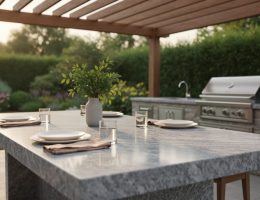
Assorted countertop samples—granite, quartz, marble, quartzite, concrete, laminate, and solid surface—arranged on a modern kitchen island beside a butcher-block section, lit by soft natural daylight, with stainless appliances and potted herbs softly blurred in the background.
Countertop Materials and Selection

Which Kitchen Countertop Material Actually Deserves Your Money?

Your kitchen countertop choice will impact your daily life for decades, influencing everything from meal preparation efficiency to home resale value. With costs ranging from $15 to $300+ per square foot installed, understanding the differences between granite, quartz, marble, quartzite, butcher block, laminate, concrete, and solid surface materials prevents costly mistakes and buyer’s remorse.
Each material brings distinct advantages and limitations. Natural stones like granite and marble offer timeless beauty with unique patterns that synthetic materials cannot replicate, while engineered quartz provides consistency and low …

Close-up of a stone cladding facade with one panel removed, exposing stainless steel anchors and a ventilated drainage cavity, with a hairline crack on a neighboring panel and blurred city scaffolding in the background.
Safety and Risk Management

Why Stone Cladding Failures Happen (And How to Prevent Structural Disasters)

Facade stone cladding transforms ordinary buildings into architectural statements, but behind every stunning exterior lies a complex network of engineering decisions that determine whether the installation will endure for decades or become a costly liability. Each year, stone cladding failures result in millions of dollars in repair costs, property damage, and in severe cases, pose serious safety risks to building occupants and pedestrians below.
The difference between a successful stone facade and a catastrophic failure often comes down to understanding three critical factors: proper anchoring systems that account for thermal …

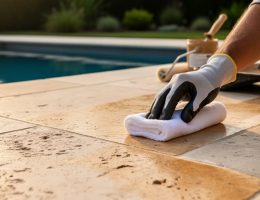
Gloved hand holding a foam applicator above a natural marble counter beside a glossy cultured marble surface with a polishing pad, in soft daylight with a blurred bathroom faucet in the background.
Marble Countertops

Why Cultured Marble Needs Different Sealant Than Natural Stone

Stop before applying any sealant to cultured marble—this engineered material fundamentally differs from natural marble and requires a completely different approach to protection. Cultured marble consists of crushed limestone mixed with resin and covered with a protective gel coat that manufacturers apply during production. This gel coat serves as the primary barrier against stains and moisture, meaning traditional marble sealants are not only unnecessary but potentially harmful to the surface.
Verify your countertop material before purchasing any product. Natural marble features unique veining patterns that penetrate throughout …

Engineer in safety gear examining stacked natural stone slabs at a clean quarry in golden hour side light, with reforested benches, rolling hills, and a compact wheel loader in the background.
Retail and Sourcing Networks

How Sustainable Stone Sourcing Protects Your Project and the Planet

Strategic sourcing of sustainable stone requires a systematic approach that balances environmental responsibility with project requirements and budget constraints. The global natural stone industry faces increasing scrutiny over quarrying practices, carbon emissions from transportation, and labor conditions—making informed procurement decisions more critical than ever.
Define your project’s sustainability criteria before engaging suppliers. Establish clear benchmarks for environmental impact, including acceptable quarry rehabilitation standards, maximum transportation distances, and required third-party certifications such …

Low-angle view of warm sunlight streaming across a textured natural stone floor in a modern living room with large south-facing windows and blurred furnishings in the background
Innovation and Technology

Stone Energy: How Natural Rock Transforms Buildings Into Thermal Powerhouses

Natural stone delivers measurable energy performance through three fundamental mechanisms: thermal mass that stabilizes indoor temperatures by absorbing and slowly releasing heat, reducing HVAC cycling by up to 30%; inherent insulation properties with R-values ranging from 0.08 to 0.20 per inch depending on stone density and composition; and passive climate control that minimizes temperature fluctuations between day and night. Understanding these properties transforms how architects and homeowners approach sustainable building design.
Stone’s energy efficiency extends beyond thermal performance. Dense materials like granite …

Modern walk-in shower with large-format quartzite or slate walls, minimal grout seams, frameless glass, and a rainfall showerhead, softly lit by natural daylight with a minimalist vanity and white towels in the background.
Health and Wellness Benefits

Why Natural Stone Showers Are Your Best Defense Against Indoor Allergens

Natural stone showers transform bathrooms into allergen-resistant sanctuaries that actively combat the health hazards lurking in conventional shower materials. While synthetic tiles and grout harbor mold spores, release volatile organic compounds, and trap allergens in microscopic crevices, natural stone provides a non-porous barrier that resists biological growth and maintains superior indoor air quality.
The health implications are significant. Traditional bathroom materials emit formaldehyde and other chemicals that accumulate in enclosed, humid spaces. Grout lines become breeding grounds for mildew and bacteria, triggering …

Building inspector in hard hat uses a handheld infrared camera to scan a stone veneer wall with fine mortar joint cracks, with blurred scaffolding and a city street in the background
Safety and Risk Management

Why Stone Veneer Failures Happen (And What Inspectors Look For)

Inspect stone veneer installations annually by examining mortar joints for cracks wider than 1/16 inch, checking for loose or hollow-sounding panels through tap testing, and documenting any visible displacement or bowing that exceeds 1/4 inch over 10 feet. Professional inspections should occur within the first year after installation, again at five years, and then every three to five years depending on climate exposure and building height.
Stone veneer failures pose serious safety risks and costly repairs when left undetected. Unlike solid masonry walls, adhered and anchored veneer systems rely on specific attachment methods and …

Close-up of an abrasive waterjet nozzle cutting a precise curved path in a white marble slab, with water spray and smooth kerf visible against a softly blurred fabrication shop background.
Emerging Stone Technologies

Why Water Jet Cutting Creates the Most Precise Stone Shapes Without Breaking Your Slab

Water jet stone cutting transforms raw slabs into intricate architectural elements using pressurized water streams reaching 60,000 PSI, mixed with fine abrasive particles that slice through marble, granite, and quartzite with tolerances as tight as 0.005 inches. This technology eliminates the heat, vibration, and structural stress associated with traditional saw cutting, preserving the stone’s natural integrity while enabling complex curves, inlays, and three-dimensional shapes previously achievable only through hand-carving. Modern fabrication shops deploy computerized waterjet systems to produce everything from kitchen countertops …

Diamond wire and CNC saws cutting a thin natural stone slab with recirculating water feeding settling tanks, in a clean fabrication shop; stacked slabs, rooftop solar panels, and an electric forklift in the softly blurred background.
Innovation and Technology

How Natural Stone Technology is Reshaping Sustainable Building

Natural stone stands at the forefront of sustainable building materials, yet its environmental credentials depend entirely on the technologies employed throughout its lifecycle. Modern natural stone innovations have transformed extraction, processing, and installation practices to minimize ecological impact while maximizing material performance.
Specify water recycling systems at quarries that recapture and reuse 90-95% of water during cutting operations, dramatically reducing…

Backlit translucent onyx kitchen island countertop glowing with warm amber veining, photographed at a 45-degree angle in a sleek modern kitchen with blurred cabinetry, pendant lights, and bar stools in the background.
Interior Applications

Transform Your Kitchen with Illuminated Stone Countertops

Illuminated stone countertops represent a transformative intersection of natural beauty and modern lighting technology, where translucent stone materials like onyx, quartzite, and certain marble varieties are backlit to create stunning, luminous focal points in residential and commercial spaces. This innovative application has gained significant traction among homeowners and designers seeking to elevate interior aesthetics beyond conventional surface treatments, making it essential to understand which stones possess the translucency required for effective illumination and how LED systems are integrated during fabrication and installation…