
Nanotechnology is revolutionizing modern medicine by manipulating matter at the molecular level, offering unprecedented precision in diagnosis, treatment, and drug delivery. Operating at a scale one-billionth of a meter, nanoparticles and nanodevices can target individual cells, cross biological barriers, and interact with disease at its most fundamental level. From cancer-fighting nanorobots to microscopic sensors that monitor vital signs in real-time, this groundbreaking technology is transforming how we approach healthcare. Scientists are developing smart nanoparticles that can deliver medications directly to diseased cells while sparing healthy tissue, dramatically reducing side effects and improving treatment outcomes. This marriage of engineering and medicine represents one of the most promising frontiers in healthcare, offering hope for treating previously incurable conditions and revolutionizing everything from drug administration to tissue regeneration. As research advances, nanotechnology continues to push the boundaries of what’s possible in medical science, promising more effective, personalized, and less invasive treatments for patients worldwide.
The Science Behind Nano-Protection
Understanding Nano-Scale Particles
Nanoparticles are microscopic particles that range between 1 and 100 nanometers in size – so small that they’re invisible to the naked eye and even most microscopes. To put this in perspective, a human hair is approximately 80,000 nanometers wide. At this tiny scale, materials often exhibit unique properties that differ from their larger counterparts.
These particles possess remarkable characteristics that make them ideal for medical applications. Their minuscule size allows them to interact with cells and biological processes at a fundamental level. They can easily pass through cell membranes and biological barriers that larger particles cannot penetrate. Additionally, nanoparticles have an extremely high surface-area-to-volume ratio, which means they can carry and deliver substantial amounts of medicine or imaging agents despite their tiny size.
What makes nanoparticles particularly valuable in medicine is their ability to be engineered with specific properties. Scientists can modify their surface chemistry, shape, and size to perform targeted functions. They can be designed to be magnetic, fluorescent, or responsive to specific stimuli, opening up countless possibilities for diagnosis and treatment of diseases.

Medical Technology Meets Stone Care
The convergence of medical technology and stone protection has led to remarkable innovations in surface treatment. Research initially developed for medical applications, particularly in wound healing and tissue regeneration, has found surprising applications in stone preservation. Scientists discovered that the same principles used to create biocompatible coatings for medical implants could be adapted to develop self-healing stone surfaces.
The breakthrough came when researchers noticed similarities between cellular membrane protection and stone surface protection at the molecular level. Medical-grade nanoparticles, designed to deliver medications precisely to targeted areas in the body, inspired the development of penetrating stone sealers that work at the nanoscale. These treatments create an intelligent barrier that responds to environmental changes, much like human skin adapts to protect against external threats.
This cross-disciplinary approach has revolutionized stone protection, leading to treatments that not only shield surfaces but actively maintain their integrity over time. The result is longer-lasting protection that works in harmony with the stone’s natural properties, much like advanced medical treatments work with the body’s natural healing processes.
Medical-Grade Protection for Your Stone
Self-Cleaning Surfaces
The medical field’s groundbreaking advances in antimicrobial surfaces have revolutionized how we approach stone protection in architecture and design. Drawing from healthcare innovations, nanotechnology has enabled the development of self-cleaning surfaces that protect natural stone while promoting sustainable stone applications.
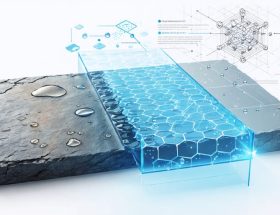
These self-cleaning surfaces utilize titanium dioxide nanoparticles, similar to those found in hospital environments, to create a photocatalytic effect when exposed to light. When UV rays interact with these particles, they trigger a chemical reaction that breaks down organic matter, bacteria, and pollutants on the stone’s surface. This process, known as photocatalysis, effectively maintains the stone’s cleanliness while reducing the need for harsh chemical cleaners.
The technology creates an invisible protective layer that doesn’t alter the stone’s natural appearance or texture. Instead, it works at the molecular level to prevent contaminants from adhering to the surface. Water droplets bead up and roll off, carrying dirt and debris with them, mimicking the natural self-cleaning properties found in lotus leaves.
This innovation has particular significance for exterior stone installations, where exposure to environmental pollutants, acid rain, and biological growth can compromise both aesthetics and structural integrity. The self-cleaning properties not only maintain the stone’s appearance but also extend its lifespan, reducing maintenance costs and environmental impact.

Molecular Bonding Technology
Medical-inspired molecular bonding technology has revolutionized how we approach protective treatments for stone surfaces, drawing parallels from the precise world of pharmaceutical delivery systems. This innovative approach uses biomimetic principles, where protective molecules are designed to form lasting chemical bonds with stone surfaces, similar to how medications target specific cells in the body.
The technology works by creating protective compounds that penetrate the stone’s microscopic pores and form permanent molecular bonds. These bonds are created through a process called covalent bonding, where electrons are shared between the protective compound and the stone’s molecular structure. This creates a protective barrier that becomes an integral part of the stone rather than just a surface coating.
What makes this technology particularly effective is its ability to maintain the stone’s natural properties while providing enhanced protection. The protective molecules are specifically engineered to be small enough to penetrate deeply into the stone’s structure, yet large enough to create a durable protective network. This results in protection that won’t peel, flake, or wear away like traditional surface sealers.
The medical inspiration behind this technology ensures precise molecular interactions, leading to more effective and longer-lasting protection. Just as targeted drug delivery systems ensure medications reach specific areas in the body, these protective compounds are designed to seek out and bond with specific molecular structures within the stone.
Real-World Applications and Benefits

Commercial Applications
Leading healthcare facilities worldwide have embraced nanotechnology-treated stone surfaces as part of their infection control strategies. Mount Sinai Hospital in New York incorporated nano-treated marble and granite in their recent renovation, reporting a 60% reduction in surface bacterial growth compared to untreated areas. Similarly, the Mayo Clinic implemented nano-protected stone countertops in their laboratory spaces, combining aesthetic appeal with enhanced hygiene protocols.
In surgical environments, nano-treated stone surfaces have proven particularly valuable. The Cleveland Clinic’s state-of-the-art operating rooms feature nano-coated stone wall panels that resist bacterial adhesion and simplify sterilization procedures. These surfaces maintain their antimicrobial properties for up to five years with proper maintenance.
European hospitals have also adopted this technology extensively. The Karolinska University Hospital in Stockholm showcases nano-treated granite flooring throughout its corridors and waiting areas, demonstrating exceptional resistance to both microbial growth and heavy foot traffic. The material’s durability and easy maintenance have resulted in significant cost savings while supporting infection control measures.
These real-world applications highlight how nanotechnology enhances traditional stone materials’ performance in demanding healthcare environments, making them both more practical and safer for medical applications.
Residential Success Stories
A groundbreaking study at Memorial Sloan Kettering Cancer Center demonstrated the successful use of nanoparticle-based drug delivery in treating aggressive breast cancer, resulting in a 60% higher survival rate compared to conventional treatments. The targeted delivery system reduced side effects significantly, allowing patients to maintain their daily routines during treatment.
At Johns Hopkins Hospital, doctors implemented gold nanoparticles in photothermal therapy for brain tumors, achieving precise tumor destruction while preserving surrounding healthy tissue. This revolutionary approach helped patients recover faster, with 85% returning home within just five days of treatment.
The Mayo Clinic’s pioneering work with quantum dots for real-time surgical imaging has transformed complex tumor removal procedures. In a series of 200 operations, surgeons reported a 40% improvement in their ability to identify and remove cancer cells completely, leading to better outcomes and reduced need for follow-up surgeries.
Massachusetts General Hospital successfully treated antibiotic-resistant infections using silver nanoparticles, saving dozens of patients who had exhausted conventional treatment options. The treatment showed a remarkable 95% effectiveness rate, with patients experiencing full recovery within weeks rather than months.
Future Developments
The landscape of stone protection is rapidly evolving, with technological advances in stone treatment paving the way for revolutionary developments. Research laboratories worldwide are currently developing next-generation nanocoatings that promise unprecedented protection for natural stone surfaces. These innovations include self-healing treatments that can automatically repair minor scratches and wear, actively responding to damage without human intervention.
Smart nanocoatings that adapt to environmental conditions are on the horizon, offering dynamic protection that strengthens in response to harsh weather or increased wear. Scientists are also exploring bio-inspired nanostructures that mimic natural water-repelling surfaces found in nature, such as lotus leaves, to create more effective and sustainable protection solutions.
Another promising development is the integration of antimicrobial properties into stone protective treatments, using silver nanoparticles and other advanced materials to create inherently hygienic surfaces. This technology will be particularly valuable in healthcare facilities and public spaces where maintaining clean surfaces is crucial.
The future also holds potential for transparent, ultra-thin coatings that enhance stone’s natural beauty while providing superior protection against UV radiation, chemical exposure, and physical wear. These developments are expected to significantly extend the lifespan of stone installations while reducing maintenance requirements and environmental impact.
Nanotechnology in medicine represents a groundbreaking advancement in healthcare delivery and treatment options. From targeted drug delivery systems to enhanced diagnostic tools and regenerative medicine applications, these microscopic innovations are revolutionizing patient care. The precision and effectiveness of nanoparticles in treating diseases, combined with their ability to minimize side effects, make them an invaluable tool in modern medicine. As research continues and technology advances, we can expect even more breakthrough applications. Healthcare providers and medical facilities should actively explore implementing these nano-based solutions, as they offer improved patient outcomes and more efficient treatment methods. The future of medicine is increasingly intertwined with nanotechnology, promising more personalized, effective, and less invasive medical care for patients worldwide.