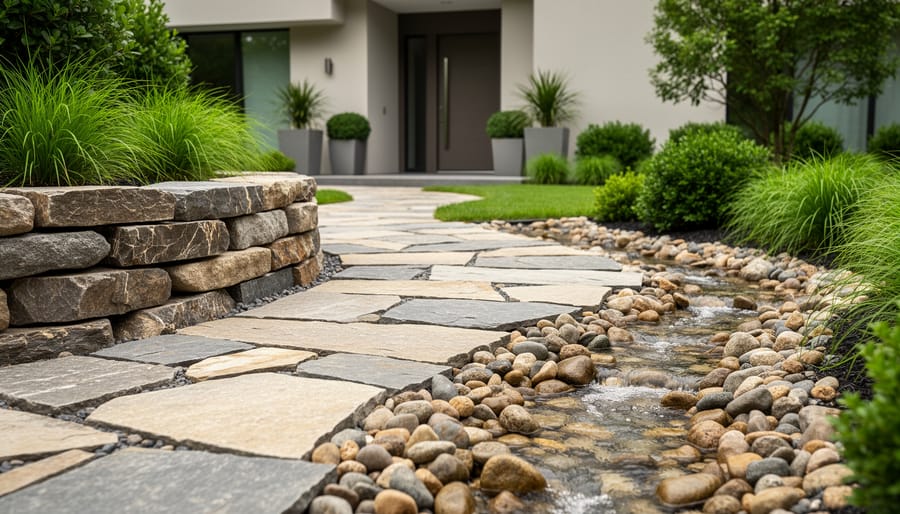
Natural stone transforms ordinary outdoor spaces into timeless landscapes that balance aesthetic appeal with exceptional durability. Whether you’re designing a compact urban courtyard or a sprawling garden retreat, stone offers unmatched versatility through flagstone pathways, boulder retaining walls, river rock water features, and architectural accents that define spaces without dominating them. The right stone design elevates property value, reduces long-term maintenance costs, and creates focal points that anchor your landscape for decades.
The challenge many homeowners and designers face isn’t finding stone applications but selecting which ones deliver the highest impact for their specific site conditions. Space constraints in urban settings demand creative solutions. High foot traffic requires careful material selection. Budget considerations push toward phased implementation rather than complete overhauls.
This guide presents 15 practical stone design ideas that address real-world scenarios. Each concept includes implementation guidance, material recommendations, and considerations for drainage, climate exposure, and integration with existing structures. You’ll find solutions for entry sequences, outdoor living areas, water management, vertical surfaces, and transitional zones where hardscape meets planting beds.
The selection criteria section that follows will help you evaluate your site’s unique requirements before exploring the individual design applications. Understanding these foundational considerations ensures your stone investment performs as intended while achieving the visual character you envision.
How We Selected These Stone Design Ideas
We evaluated each design idea against six essential criteria to ensure every recommendation delivers real value for urban landscapes. First, urban practicality: each stone application must function effectively in high-traffic areas with space constraints typical of city environments. Second, aesthetic impact: the stone should enhance architectural surroundings and create visual interest without overwhelming the space.
Sustainability ranked third, we prioritized low maintenance stone options that reduce long-term resource consumption and support environmental goals like stormwater management. Fourth, ease of maintenance: materials need to withstand urban conditions (pollution, heavy use, de-icing salts) without demanding constant upkeep.
Versatility was our fifth criterion. We selected ideas adaptable across different urban contexts, from pocket parks to corporate plazas. Finally, proven performance matters, each application has a track record of successful implementation in real-world urban projects, not just theoretical appeal. This combination ensures you’re choosing stone solutions that work as hard as they look good.
1. Granite Paver Plazas and Gathering Spaces
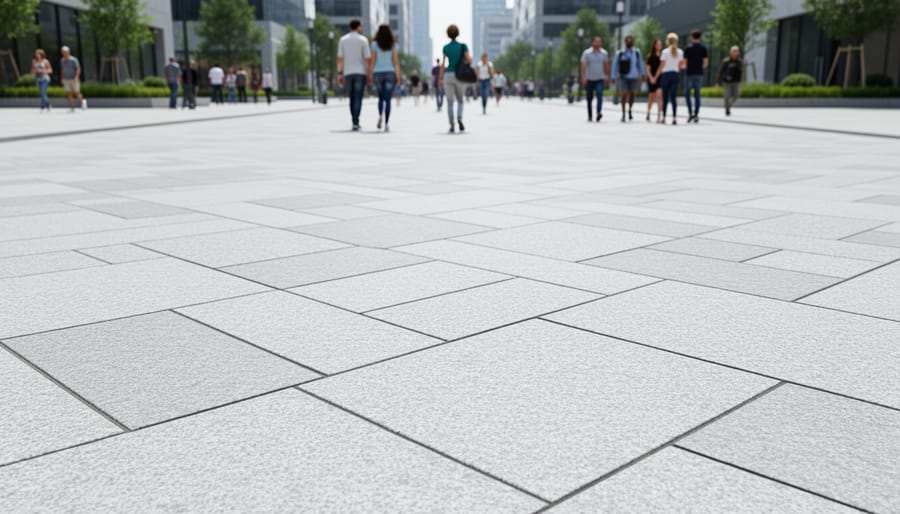
Granite pavers form the backbone of successful urban plazas because they deliver unmatched durability where thousands of feet pass daily. A well-designed granite plaza in downtown Chicago has maintained its appearance for over 15 years with minimal maintenance, handling commuter traffic, street festivals, and harsh winters without cracking or significant wear.
The material’s compressive strength exceeds 20,000 psi, making it ideal for high-traffic gathering spaces. Urban designers favor granite for its resistance to freeze-thaw cycles, salt damage, and staining from food vendors or public events. Unlike poured concrete that shows every crack and repair, granite pavers can be individually replaced if damaged, keeping maintenance costs predictable over decades.
Color options extend far beyond gray. Charcoal-black absolute granite creates dramatic modern plazas, while warm rosa beta granite brings inviting tones to pedestrian-friendly spaces. Many projects mix two or three granite colors in geometric patterns, alternating bands, radiating circles from central fountains, or checkerboard layouts that define different plaza zones for seating, performance, and circulation.
Installation patterns matter as much as color. Running bond creates directional flow toward key destinations, while modular patterns with varying paver sizes add visual interest without overwhelming smaller urban pockets. The key is selecting a finish: thermal (flame) finishes provide slip resistance for all-weather safety, while honed surfaces suit sheltered courtyards where elegance outweighs traction concerns.
2. Limestone Seating Walls and Edges
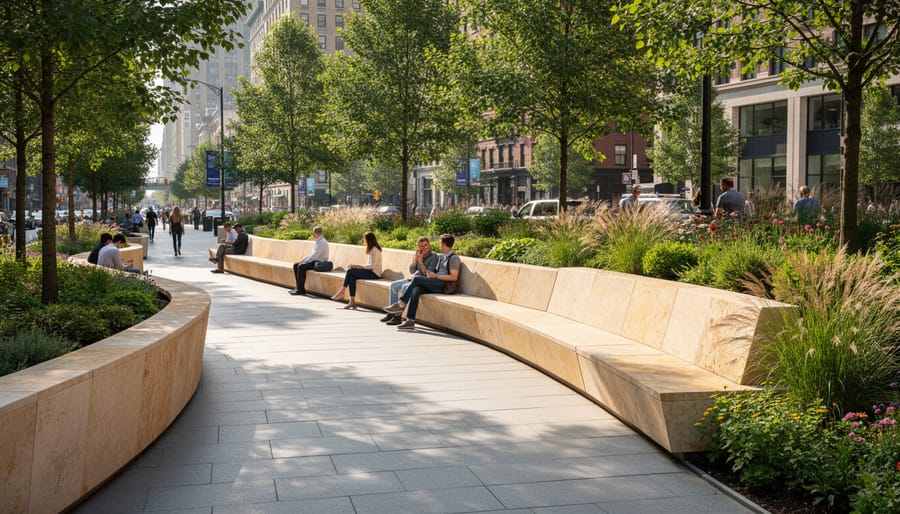
Limestone seating walls transform vertical space into functional gathering spots while defining landscape zones with soft, inviting texture. In urban parks and streetscapes, these dual-purpose structures eliminate the need for separate benches, creating clean lines that blend infrastructure with social space. A 16-18 inch height works best for comfortable seating, while thicker cap stones provide edge detail and prevent chipping.
The stone’s natural warm tones, from cream to buff to light gray, soften hardscape-heavy urban environments without competing with surrounding architecture. Unlike metal or concrete benches, limestone maintains a moderate temperature, staying cooler in summer heat and less frigid in winter months. This makes seating walls usable across seasons in climates where outdoor gathering happens year-round.
For retaining walls, limestone’s workability allows precise cuts for tight radius curves around planting beds or tree wells. Ashlar patterns create formal elegance in corporate plazas, while dry-stacked ledgestone offers organic texture for park settings. The stone’s porosity means walls need proper drainage design, weep holes and gravel backfill prevent moisture buildup that could cause winter freeze damage.
Edge applications include raised planting beds that protect vegetation from foot traffic while creating visual interest at multiple heights. Coping stones atop shorter walls provide defined borders for sidewalk planters, directing pedestrian flow while adding dimension to linear streetscapes.
3. Bluestone Pathways and Walkways
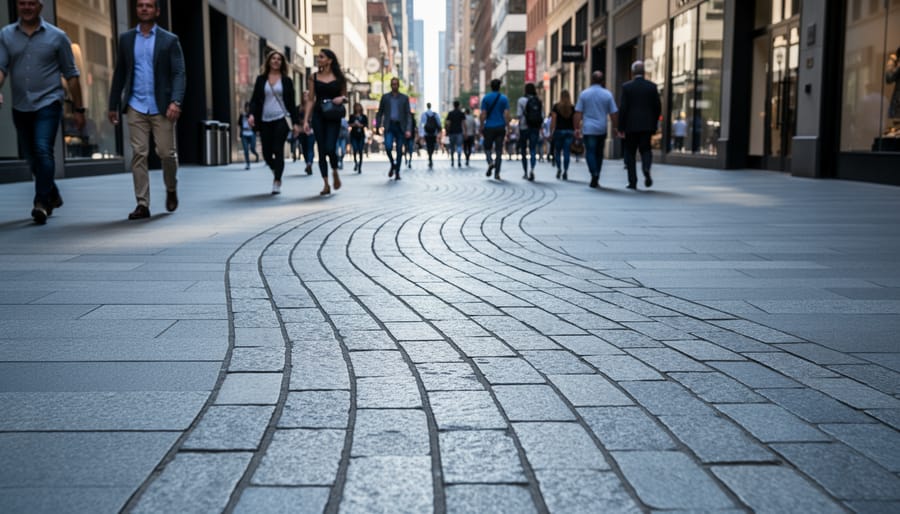
Bluestone delivers exceptional performance for urban pedestrian paths, combining practical safety features with architectural elegance that suits both contemporary and traditional streetscapes. Its naturally textured surface provides reliable slip resistance in wet conditions, a critical factor for high-traffic walkways in cities where rain, snow, and foot traffic converge.
The stone’s dense composition withstands freeze-thaw cycles without cracking or spalling, making it particularly valuable in climates with harsh winters. Unlike softer paving materials that deteriorate within a few years, properly installed bluestone pathways maintain their structural integrity for decades with minimal maintenance. Its subtle color palette, ranging from silvery blue-gray to warmer charcoal tones, harmonizes with glass facades, brick buildings, and metal street furniture without competing for attention.
Urban designers favor bluestone for its installation flexibility. Full-dimension slabs create seamless modern paths with tight joints, while smaller rectangular pavers allow for intricate herringbone or basketweave patterns that add visual interest to plaza connections and park trails. The material cuts cleanly, enabling precise fitting around tree wells, utility covers, and existing infrastructure, essential in constrained urban sites.
Thermal flagging, which gives bluestone a lightly roughened finish, enhances traction without sacrificing the stone’s refined character. This treatment proves especially effective for sloped pathways and bridge approaches where pedestrian safety demands exceed standard paving requirements.
4. Slate Water Features and Fountains
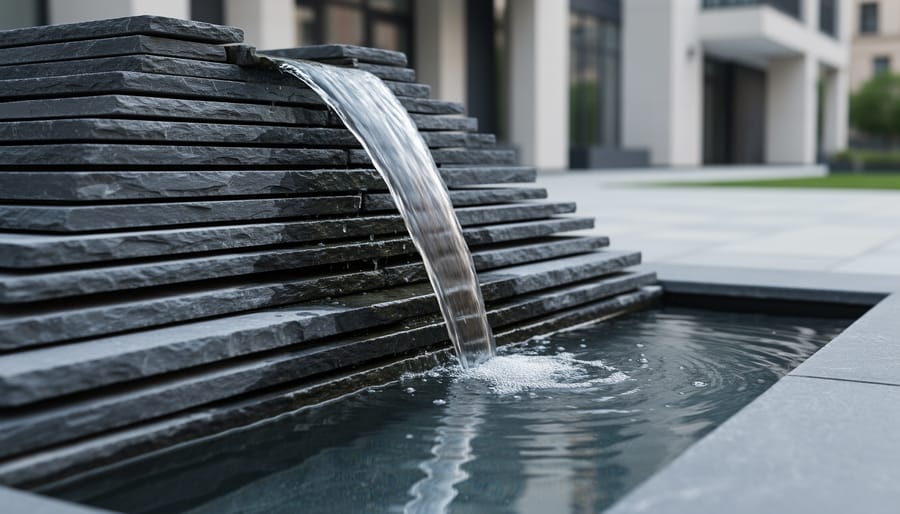
Slate transforms urban water features into sophisticated focal points that command attention without overwhelming the space. Its fine-grained texture and natural stratification create dynamic light play as water cascades over layered surfaces, while the stone’s inherent impermeability ensures decades of reliable performance in constant moisture conditions.
Modern slate fountains range from minimalist wall-mounted sheets with controlled water flow to multi-tiered structures that animate public plazas with sound and movement. The stone’s rich color palette, from charcoal and black to green-grey and burgundy, allows designers to match any architectural context, whether complementing glass-and-steel towers or historic brick neighborhoods. In Chicago’s Millennium Park expansion, stacked slate panels form a 12-foot water wall that cools the microclimate while doubling as a striking visual screen.
For naturalistic applications, irregular slate pieces create convincing stream beds and pond edges that integrate seamlessly with planted areas. The stone’s tendency to split into flat, angular pieces makes installation straightforward while maintaining an organic appearance. Pair slate water features with stone column design elements or basalt accents for dimensional interest.
Maintenance requires quarterly cleaning to prevent mineral buildup, but slate’s dense structure resists algae growth better than porous limestone. The stone’s slip-resistant surface when wet makes it particularly suitable for interactive splash features in urban parks where safety is paramount.
5. Travertine Outdoor Dining Terraces
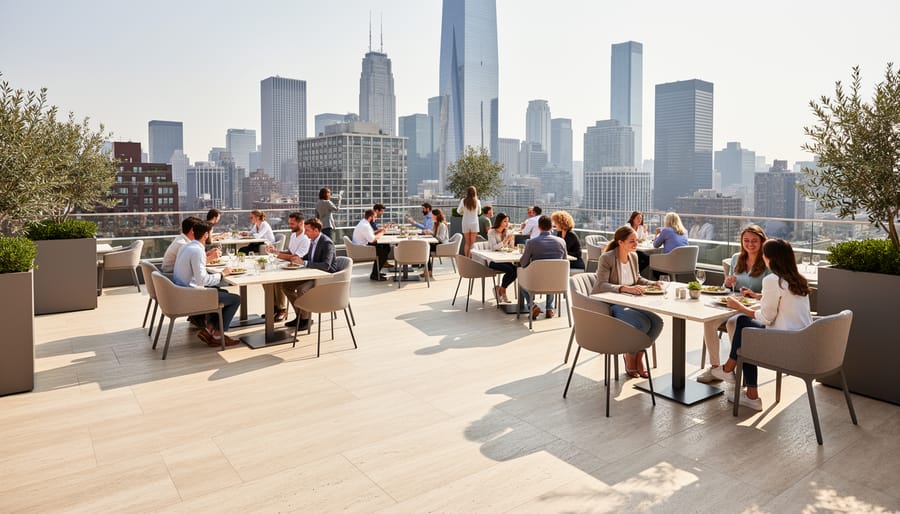
Travertine transforms urban rooftops, sidewalk cafes, and courtyard restaurants into inviting outdoor dining destinations that feel both sophisticated and welcoming. Its naturally porous surface stays cooler underfoot than granite or concrete during summer heat, a critical advantage for barefoot diners on rooftop terraces or families with children. The stone’s warm honey, ivory, and beige tones create an instant Mediterranean ambiance that encourages lingering over meals, while its tumbled or honed finishes offer enough texture for slip resistance without sacrificing the smooth, refined look patrons expect.
Urban restaurateurs favor travertine for its ability to define dining zones within larger public spaces. A travertine terrace clearly delineates the restaurant’s footprint while blending seamlessly with surrounding streetscapes. The stone handles frequent furniture movement, wine spills, and weather exposure without showing wear, maintaining its appearance through thousands of service hours. Fill the natural pits with resin for a smoother surface that’s easier to clean, or leave them unfilled for authentic rustic character.
Pair travertine pavers with vertical planters and string lighting to soften hard urban edges. The stone’s neutral palette complements any cuisine style, from Italian trattorias to modern fusion concepts, giving designers flexibility in branding and decor while delivering a foundation that performs season after season.
6. Basalt Column Accent Features
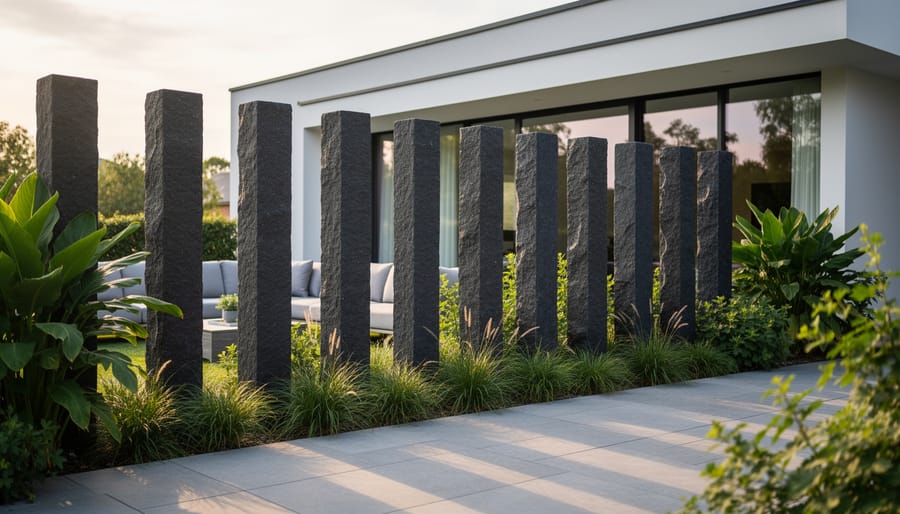
Basalt columns bring vertical drama and contemporary sophistication to urban landscapes through their striking geometric forms and deep charcoal coloring. These naturally formed hexagonal pillars, created by ancient volcanic cooling processes, transform ordinary spaces into architectural statements that stand out against typical horizontal hardscaping.
In high-density urban settings, designers install basalt columns as free-standing sculptural elements that anchor courtyards and entry plazas. Groups of varying heights create dynamic focal points that draw the eye upward, making compact spaces feel more expansive. Their naturally angular faces catch light and shadow throughout the day, producing constantly shifting visual interest without requiring maintenance or power.
For privacy screening, basalt columns offer an elegant alternative to traditional fencing. Installed in close rows or integrated with horizontal stone panels, they define boundaries while maintaining an open, sophisticated aesthetic. This application works particularly well for rooftop terraces and restaurant patios where solid walls would feel oppressive.
Water features gain modern edge when basalt columns function as fountains, with water sheets flowing down their polished faces or bubbling from their tops. The contrast between dark stone and moving water creates mesmerizing effects in corporate plazas and residential courtyards.
The stone’s durability withstands freeze-thaw cycles and urban pollution without deterioration, making basalt columns a permanent investment in landscape character.
7. Sandstone Amphitheater Seating
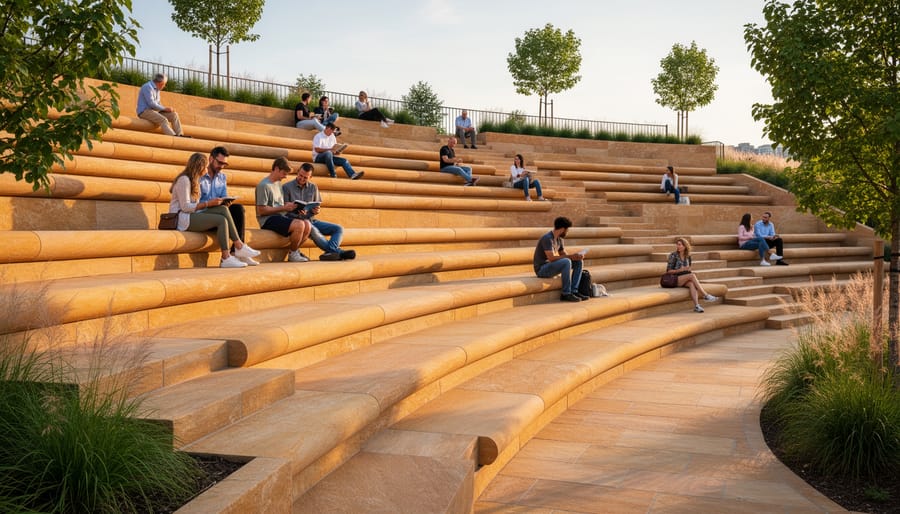
Sandstone’s natural warmth and workability make it exceptional for creating tiered amphitheater seating in urban parks and performance spaces. The stone’s earthy tones, ranging from buff and tan to reddish-brown, evoke a welcoming, informal atmosphere that encourages community gathering while its thermal properties remain comfortable under sun exposure.
Urban amphitheaters built with sandstone blocks or slabs typically feature curved or semicircular terracing that follows natural topography or creates intentional elevation changes. Each tier serves dual purposes: seating during events and casual resting spots during daily park use. The stone’s slightly textured surface provides natural slip resistance and tactile appeal without the cold, institutional feel of concrete.
Installation involves stacking sandstone blocks in stepped formation, with each tier set back slightly for comfortable seating depth (typically 16-18 inches). Integrated drainage between levels prevents water pooling, and gaps between stones allow for plantings that soften hard edges. In Chicago’s Millennium Park and similar venues, sandstone amphitheaters accommodate hundreds while maintaining an intimate scale through careful proportioning.
The material pairs effectively with other landscape elements, sandstone seating flows naturally into granite paving, marble cladding on adjacent structures, or native plantings that frame the performance area. Regular sealing protects against weathering while preserving the stone’s characteristic warmth and color depth across seasons.
8. Mixed Stone Mosaic Paving Patterns
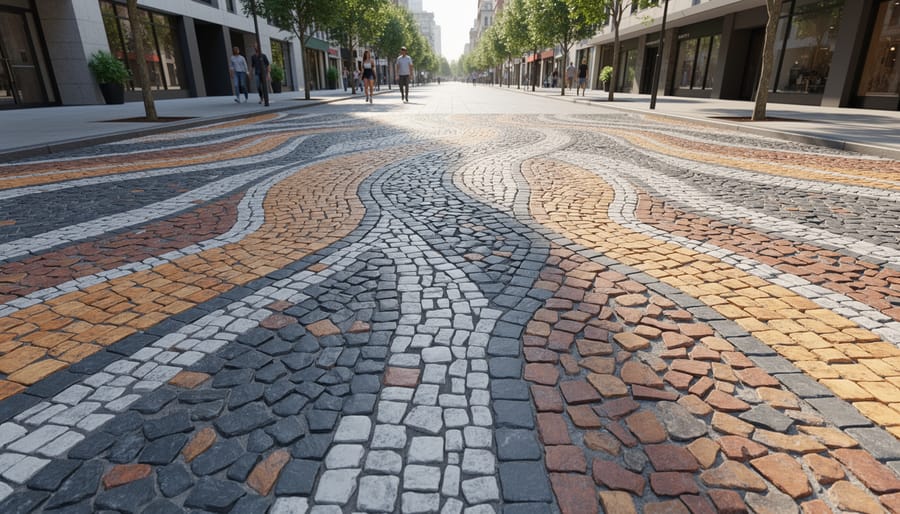
Mixed stone mosaic paving transforms functional walkways into urban art installations that guide, delight, and anchor public spaces. By combining granite, limestone, slate, and other materials in intentional patterns, designers create paving that communicates identity, marks destinations, and elevates the pedestrian experience beyond simple circulation.
The technique works particularly well where cultural significance meets daily foot traffic. A neighborhood plaza might feature a compass rose mosaic in contrasting black granite and cream limestone that orients visitors while celebrating maritime heritage. Transit stations use radial patterns in alternating stone colors to direct flow toward entrances. Historic districts incorporate traditional geometric designs, Greek key borders, Celtic knots, Moorish stars, executed in multiple stone types to reinforce local character.
Material selection drives pattern success. Combine stones with similar hardness ratings to ensure even wear, pairing soft sandstone with hard granite creates uneven surfaces as traffic erodes one faster than the other. Contrast works through color (charcoal basalt against buff travertine), texture (honed limestone rectangles within flamed granite fields), or size (small slate accents punctuating large bluestone pavers).
Installation complexity and cost increase with pattern intricacy, but durability matches that of single-stone paving when properly executed. The visual return, wayfinding clarity, cultural storytelling, memorable place-making, justifies the investment in high-visibility urban settings where paving becomes a defining landscape feature rather than mere background infrastructure.
9. Marble Accent Walls and Cladding
Marble transforms urban landscapes from ordinary to extraordinary when used strategically as accent walls and cladding. Its luminous surface catches and reflects light throughout the day, creating dynamic visual interest in spaces that might otherwise feel cold or industrial. In rooftop gardens, white or cream Carrara marble cladding on planter walls provides a clean, contemporary backdrop that makes greenery pop while amplifying available light in shaded areas.
For building entries and lobby exteriors, book-matched marble panels create symmetrical patterns that convey prestige and permanence. The veining in each slab becomes natural artwork, eliminating the need for additional decorative elements. Darker varieties like Emperador or Verde marble work particularly well as feature walls in urban courtyards, offering rich contrast against lighter paving and establishing clear zones within larger spaces.
Urban monuments and memorials frequently employ marble cladding for its cultural associations with permanence and respect. The material withstands weathering better in dry climates, though proper sealing and regular maintenance extend its life in wetter regions.
Installation requires experienced professionals, as marble’s weight demands robust structural support and its surface needs careful handling to prevent chipping. For vertical applications, mechanical anchoring systems prove more reliable than adhesive-only methods, especially on exterior walls exposed to temperature fluctuations.
10. River Rock Bioswales and Drainage
River rock transforms functional stormwater infrastructure into attractive landscape features that manage urban runoff while adding natural beauty. These rounded stones, ranging from one to six inches, line bioswales and drainage channels that slow water flow, filter pollutants, and allow gradual soil absorption instead of overwhelming storm drains.
In high-density areas where impervious surfaces create runoff problems, bioswales lined with river rock provide a sustainable solution. The stones stabilize soil, prevent erosion during heavy rain, and create visual interest along streets, parking areas, and building perimeters. Designers often combine river rock with native grasses and wetland plants, creating layered systems where stones handle the drainage mechanics while vegetation provides filtration and seasonal color.
The aesthetic appeal lies in river rock’s organic shapes and varied colors, grays, tans, whites, and earth tones that blend seamlessly with urban plantings. Unlike rigid concrete channels, river rock bioswales feel natural even in contemporary settings. They work particularly well in residential developments, corporate campuses, and pedestrian zones where sustainability goals align with design quality.
Proper installation requires geotextile fabric beneath the rock layer to prevent soil migration, appropriate grading for water flow, and thoughtful plant selection for the local climate. When correctly designed, these systems require minimal maintenance while delivering measurable environmental benefits.
11. Quartzite Stairways and Terracing
Quartzite brings exceptional durability and visual appeal to urban stairways and terraced landscapes where elevation changes present both challenges and opportunities. Its natural sparkle, created by interlocking quartz crystals, catches sunlight beautifully while its extreme hardness resists the wear patterns that plague softer stones in high-traffic vertical transitions.
In multi-level urban gardens and rooftop terraces, quartzite steps provide secure footing with naturally slip-resistant surfaces that remain safe in wet conditions. The stone’s low porosity means minimal water absorption, preventing the freeze-thaw damage that cracks lesser materials in cold climates. This makes quartzite ideal for outdoor stairs that face direct weather exposure without deteriorating.
The material works equally well in formal and naturalistic designs. Precision-cut quartzite treads create clean, contemporary staircases connecting plaza levels, while hand-split steps integrate seamlessly into hillside gardens and park landscapes. Color options range from soft grays and whites to warm golds and russets, allowing coordination with surrounding architecture and plantings.
For terracing steep urban lots, quartzite retaining walls paired with matching steps create cohesive multi-level spaces. The stone’s strength supports significant soil loads while maintaining visual elegance. Installation requires proper foundation work and drainage considerations, but the result is a permanent solution that improves with age as the stone develops a natural patina.
12. Fieldstone Retaining Walls
Fieldstone retaining walls bring rustic character and practical slope management to urban hillside properties. These walls use uncut or minimally dressed stones gathered from local quarries or fields, creating structures that feel organic yet engineered for stability.
In contemporary urban applications, fieldstone walls serve dual purposes: they prevent erosion on sloped lots while creating level planting terraces for gardens, patios, or additional usable outdoor space. The irregular shapes and varied colors of fieldstone add textural depth that complements both historic architecture and modern buildings seeking a naturalistic counterpoint.
Dry-stacked fieldstone walls work effectively for shorter heights (typically under three feet), relying on gravity and careful stone selection for stability. Taller urban applications require mortared construction with proper drainage and sometimes engineered footings, particularly in areas with freeze-thaw cycles or seismic activity.
The beauty of fieldstone lies in its variation. Each wall becomes unique, with stone colors ranging from warm browns and grays to rust tones and greenish hues depending on regional geology. This natural diversity helps urban walls blend seamlessly with planted landscapes while providing visual interest throughout the year.
For hillside properties, stepped fieldstone terraces transform unusable slopes into functional garden zones, outdoor rooms, or even productive vegetable plots, maximizing limited urban land.
13. Cobblestone Street Restoration and Accents
Cobblestone streets represent a tangible connection to urban history, and their restoration has become a strategic design choice for cities seeking to preserve character while improving modern streetscapes. Historic cobblestone, typically granite or basalt cubes hand-laid in sand, offers exceptional durability that has allowed many streets to survive a century or more. Rather than paving over these assets, forward-thinking municipalities are restoring original cobblestone streets in historic districts, using authentic techniques with modern base preparation to ensure longevity while maintaining authenticity.
For contemporary projects, cobblestone accents deliver both aesthetic impact and functional benefits. Inserting cobblestone bands at pedestrian crossings, intersection corners, or parking lane edges creates visual texture that naturally slows traffic without signage. The subtle unevenness discourages speeding while remaining comfortable for pedestrians. In mixed-use developments, cobblestone medallions or border patterns distinguish plazas from through-streets, defining spaces for outdoor fire features seating areas, or farmer’s markets.
Installation requires specialized masons familiar with traditional laying patterns, fan, arc, or linear, and proper drainage considerations. While costlier upfront than asphalt, cobblestone’s 75-plus-year lifespan and minimal maintenance make it economically sensible for high-visibility urban zones where character and permanence matter.
14. Porphyry Pedestrian Crossings
Porphyry cubes bring a distinctive European streetscape aesthetic to pedestrian crossings while delivering exceptional durability under constant vehicle and foot traffic. These small-format volcanic stone blocks, typically 4×4 inches or 6×6 inches, create textured surfaces that naturally slow traffic and clearly delineate pedestrian zones.
The raised profile of porphyry paving provides tactile feedback that alerts drivers to transition zones between roadways and shared spaces. In mid-block crossings, porphyry patterns create visual contrast against standard asphalt, making pedestrians more visible to approaching vehicles. Many urban designers combine gray and red porphyry varieties in alternating bands to reinforce the crossing zone without relying solely on painted markings that fade quickly under traffic.
Unlike painted crosswalks requiring annual repainting, porphyry installations maintain their appearance for decades with minimal maintenance. The interlocking cube pattern distributes weight evenly, preventing the cracking and settling common in poured concrete crossings. Permeable joint spacing between cubes allows rainwater infiltration, reducing surface pooling that creates hazards for pedestrians.
Porphyry crossings work particularly well in historic districts where they complement existing stone streetscapes, but contemporary urban planners increasingly specify them for high-traffic intersections and plaza entries where durability and distinctive character matter more than initial installation cost. The upfront investment typically pays back through eliminated repainting cycles and extended service life exceeding fifty years.
15. Natural Stone Fire Pits and Gathering Circles
Natural stone transforms fire pits from simple heat sources into architectural focal points that anchor urban outdoor spaces. Granite stands out for its exceptional heat resistance and durability, making it ideal for fire pit surrounds and coping that will endure years of temperature extremes without cracking or discoloration. Its polished or flamed finishes add contemporary sophistication to rooftop terraces and courtyard installations.
Limestone creates warm, inviting gathering circles with its soft color palette ranging from cream to warm gray. When properly sealed, it performs well around fire features while maintaining a comfortable surface temperature for nearby seating walls. The material’s ability to be cut into curved segments makes it perfect for circular designs that encourage social interaction in community parks and residential courtyards.
Flagstone offers rustic charm for more naturalistic fire pit settings. Its irregular shapes and varied thickness create organic-looking installations that feel less formal while still providing functional heat reflection and ground protection. Many urban designers combine flagstone for the surrounding patio with cut granite or limestone for the actual fire pit ring, balancing aesthetic warmth with technical performance.
Basalt works exceptionally well for modern, minimalist fire features. Its dark coloring and fine grain create dramatic contrast against flames while offering excellent thermal properties for sustained use.
Bringing Natural Stone Design to Your Urban Space
Transforming your urban space with natural stone requires thoughtful planning and the right partnerships. Start by consulting with experienced stone installers who understand urban site constraints, tight access, utilities, drainage requirements, and municipal codes. Their expertise prevents costly mistakes and ensures your stone features perform beautifully for decades.
Climate conditions directly affect stone selection and installation methods. In freeze-thaw climates, choose non-porous stones like granite or basalt and ensure proper drainage to prevent cracking. For hot, sun-exposed areas, light-colored limestone or travertine stays cooler underfoot than darker alternatives. Your installer should recommend stones proven to thrive in your specific environment.
Budget considerations extend beyond initial costs. While premium stones like marble cost more upfront, granite or bluestone often deliver better value over 20-30 years when you factor in minimal maintenance and replacement needs. Calculate lifecycle costs, not just installation prices.
Before breaking ground, complete these essential steps:
- Verify local permits and easement restrictions for hardscape modifications
- Conduct a site survey identifying underground utilities and drainage patterns
- Select stone that complements your building’s architecture and existing materials
- Request samples to evaluate color, texture, and finish in your actual lighting conditions
- Establish a realistic timeline accounting for material lead times and weather dependencies
Natural stone represents an investment in sustainability. Unlike concrete or asphalt that require replacement every 15-20 years, properly installed stone can last a century or more while maintaining its beauty. You’re not just enhancing your immediate environment, you’re creating enduring urban spaces that serve multiple generations while supporting stormwater management, reducing heat island effects, and providing habitat value through permeable installations.
Frequently Asked Questions
Selecting and installing landscape stone in urban environments brings unique considerations that go beyond typical residential projects. Here are answers to the most common questions about implementing these natural stone design ideas in city spaces.
What is the typical cost range for urban stone installations?
Costs vary widely depending on stone type and project scope, with basic installations like river rock drainage starting around $15-25 per square foot, while premium applications like marble cladding or custom mosaic patterns can reach $75-150 per square foot. Labor typically accounts for 40-60% of total project costs in urban settings due to access challenges and specialized installation requirements.
How long does a typical urban stone installation take?
Small projects like a stone fire pit or seating wall can be completed in 1-2 weeks, while larger installations like plaza paving or extensive pathways typically require 4-8 weeks from site preparation to completion. Urban projects often face longer timelines due to permit approvals, utility coordination, and restricted work hours in high-traffic areas.
Do I need permits for landscape stone projects in urban areas?
Most substantial stone installations in urban settings require permits, particularly for public spaces, street-facing elements, structural walls over 4 feet, and any work affecting drainage or sidewalks. Your contractor or landscape architect should handle permit applications and ensure compliance with local building codes and historic district regulations if applicable.
How much maintenance do urban stone installations require?
Natural stone in urban settings needs minimal but regular maintenance, including annual cleaning with appropriate pH-balanced cleaners, periodic resealing every 2-5 years for porous stones like limestone and sandstone, and occasional joint repair for paved areas. High-traffic urban locations benefit from quarterly inspections to address wear patterns before they become problematic.
Which stone types work best in harsh urban climates?
Granite, basalt, and quartzite offer superior freeze-thaw resistance for cold climates, while dense stones like bluestone and certain sandstones handle hot, dry conditions well. Avoid highly porous stones like travertine in areas with severe winters unless properly sealed, and consider salt resistance if the installation is near roadways that use de-icing treatments.
Can existing urban hardscapes be retrofitted with natural stone?
Many concrete plazas, asphalt pathways, and generic paving can be upgraded with natural stone overlays or complete replacements, though structural assessments are essential to ensure proper drainage and load-bearing capacity. Retrofits work particularly well when refreshing dated commercial districts or converting underutilized spaces into pedestrian-friendly areas.
When planning your urban stone project, connect with local landscape architects and stone specialists who understand both the technical requirements and aesthetic possibilities for your specific location. Their expertise helps you avoid costly mistakes and ensures your stone design delivers lasting beauty and functionality in the demanding urban environment.