
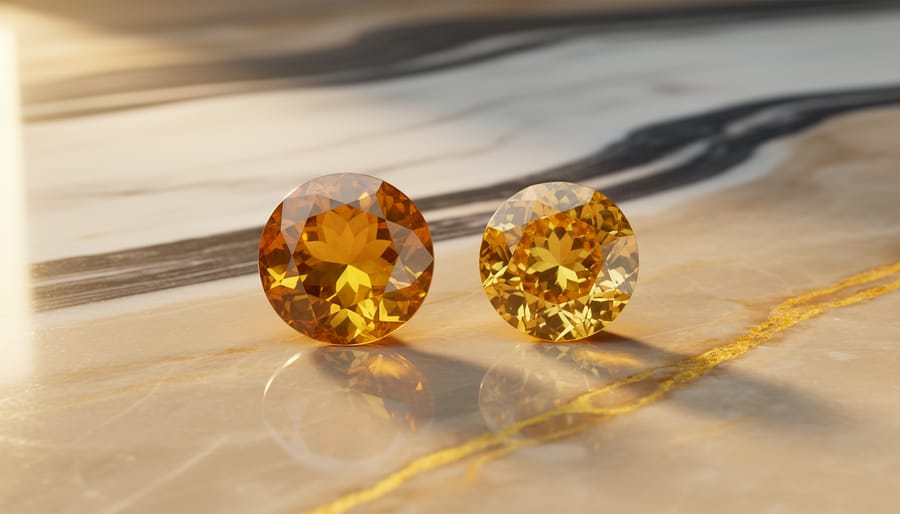
Yellow gemstones are naturally occurring minerals valued for their golden to amber hues, ranging from the pale lemon tones of citrine to the rich canary yellows of sapphire and diamond. These stones have been prized across cultures for millennia, not only for their beauty but for their symbolic associations with prosperity, energy, and intellectual clarity.
For architects and designers specifying natural stone in residential and commercial projects, understanding yellow gemstones extends beyond jewelry applications. These materials appear in decorative inlays, accent pieces, and luxury finishes where their warm tones complement natural stone palettes. The same geological processes that create these gems often produce the yellow veining and mineral deposits found in marble, onyx, and other architectural stones, making their study relevant to material selection and sourcing.
The meanings attributed to yellow gemstones vary by culture and stone type, but common threads emerge. In Western traditions, yellow stones symbolize optimism and mental clarity. Across Asian markets, particularly in China and India where regional stone trading has deep historical roots, yellow gemstones represent wealth and divine favor. Citrine has long been associated with merchants and abundance, while yellow sapphire holds significance in Vedic astrology for wisdom and prosperity.
This guide examines the most common yellow gemstones used in design and ornamentation, their cultural significance across major trading regions, and practical considerations for incorporating these materials into architectural projects. Whether you’re sourcing accent stones for a luxury installation or understanding the symbolism clients bring to material choices, knowing these distinctions matters.
What Yellow Gemstones Are
Yellow gemstones are naturally occurring minerals that display colors ranging from pale butter and soft honey to deep golden amber and vivid canary yellow. Unlike synthetic imitations, these stones form over thousands to millions of years through specific geological conditions, high heat, extreme pressure, or unique chemical environments, that incorporate trace elements responsible for their warm hues.
The yellow coloring in these gemstones comes from different sources depending on the stone type. In yellow diamonds, nitrogen atoms replace carbon in the crystal structure, absorbing blue light and reflecting yellow. Citrine gets its golden tones from heat-treated iron impurities within quartz crystals. Yellow sapphires owe their color to iron and occasionally titanium, while imperial topaz develops its prized orange-yellow shade through chromium. Amber represents a different category entirely, fossilized tree resin rather than a true mineral, but its honey tones come from organic compounds preserved over millions of years.
Most yellow gemstones form deep in the earth’s crust or mantle where temperature and pressure conditions allow specific crystal structures to develop. Volcanic activity often brings these stones closer to the surface, making them accessible through mining. Regional geological variations explain why certain yellow stones appear predominantly in specific areas, yellow sapphires in Sri Lanka and Montana, amber along the Baltic coast, citrine in Brazil.
Understanding basic gemstone terminology helps when evaluating these stones:
- Hue
- The specific shade of yellow, from greenish-yellow to orangish-yellow, which affects desirability and market value.
- Saturation
- The intensity or purity of the yellow color; higher saturation means richer, more vivid tones without gray or brown modifiers.
- Clarity
- The presence or absence of internal inclusions and external blemishes visible under magnification.
- Carat Weight
- The measurement of a gemstone’s mass, where one carat equals 200 milligrams.
- Natural vs. Treated
- Natural stones form without human intervention, while treated stones undergo heat, irradiation, or other processes to enhance color or clarity.
The geological rarity of pure yellow coloring in certain stones, combined with the precise chemical conditions required for formation, makes some yellow gemstones significantly more valuable than others in regional and international markets.
Major Types of Yellow Gemstones
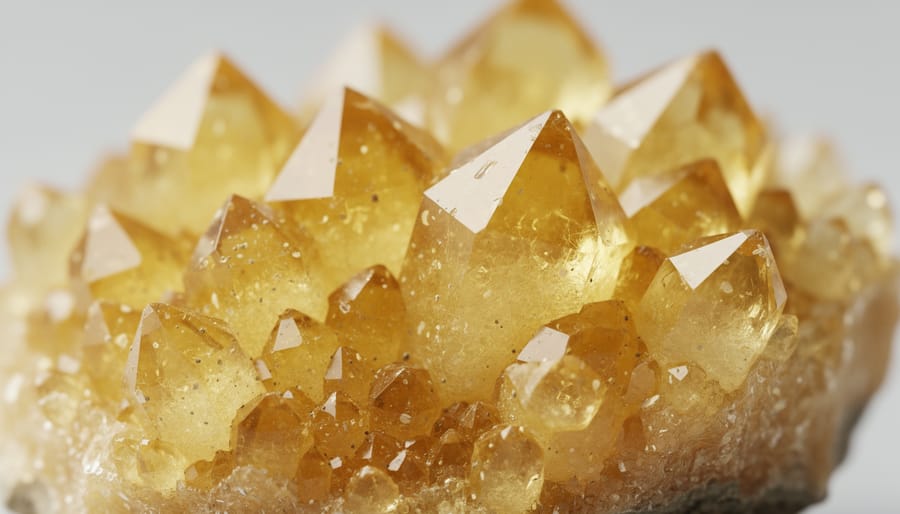
Yellow Diamond and Citrine
Yellow diamonds form deep within the Earth’s mantle when nitrogen atoms replace carbon in the crystal structure during formation. This substitution creates the stone’s distinctive color, ranging from pale champagne to vivid canary yellow. The most significant deposits occur in South Africa’s Premier Mine, Australia’s Argyle Mine (now closed), and select sites in Russia and Brazil. Natural yellow diamonds command premium prices, with vivid stones fetching tens of thousands per carat in international markets.
Citrine develops through different geological processes. Most commercial citrine begins as amethyst or smoky quartz that undergoes heat treatment, either naturally through volcanic activity or commercially in controlled environments. Natural citrine forms when iron impurities combine with quartz under specific temperature conditions. Brazil supplies the majority of natural citrine, particularly from Rio Grande do Sul, while Madagascar and Zambia produce smaller quantities.
The two stones differ substantially in hardness and durability. Yellow diamonds rank 10 on the Mohs scale, making them suitable for daily-wear jewelry and high-traffic decorative inlays. Citrine measures 7, requiring more careful placement in architectural applications. Both stones appear in luxury hotel installations, private residence accent pieces, and statement jewelry. Citrine’s affordability makes it accessible for larger decorative panels and custom furniture inlays, while yellow diamonds typically feature in smaller, high-value applications where their rarity justifies the investment.
Yellow Sapphire and Topaz
Yellow sapphires and imperial topaz represent the premium tier of yellow gemstones in global markets, commanding prices that reflect both their rarity and historical prestige. Yellow sapphires, formed through aluminum oxide crystallization with iron impurities, originate primarily from Sri Lanka, Madagascar, and Australia, with Ceylon stones prized for their pure golden hue free of secondary brown tones. Imperial topaz, named for Russian royalty who claimed exclusive rights to the finest specimens, develops in pegmatite deposits in Brazil’s Ouro Preto region, where mining operations extract crystals ranging from golden-orange to peachy-amber.
The trading value of these stones hinges on saturation and tone, vivid, pure yellows fetch significantly higher prices than pale or muddy examples. Yellow sapphires in the 2-5 carat range typically trade between $400 and $3,000 per carat for unheated material, while heated stones sell for 30-50% less. Imperial topaz commands $100-600 per carat depending on color intensity and clarity. Both stones featured prominently in ancient stone festivals and royal treasury collections across Asia and Europe.
Treatment disclosure remains critical in modern gemstone trading. Heat treatment, standard practice for sapphires, enhances color stability but must be declared to buyers. Topaz occasionally undergoes irradiation to deepen color, a treatment that reduces market value by 40-60% compared to naturally-colored specimens.
Amber, Beryl, and Other Yellow Stones
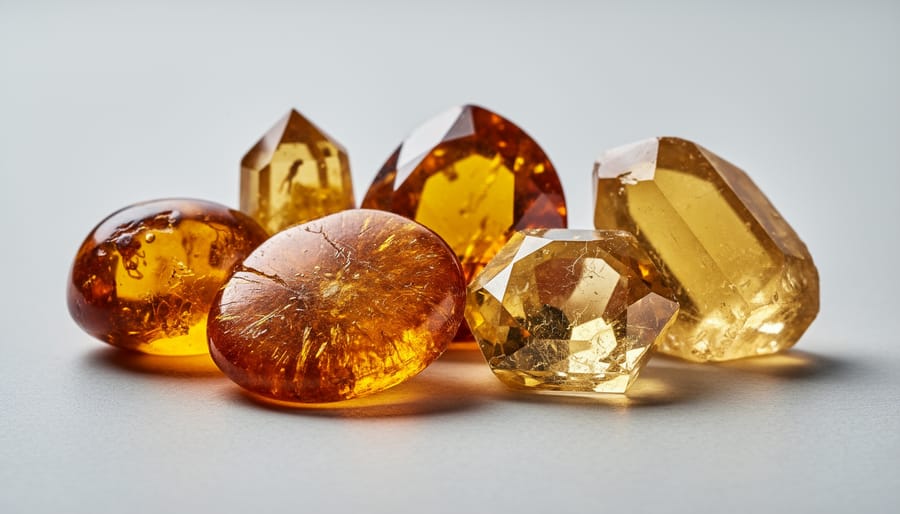
Amber stands apart from mineral gemstones as fossilized tree resin, most famously sourced from Baltic deposits that have supplied European markets for thousands of years. Its warm golden and honey tones contain preserved plant material and occasional insects, making each piece unique. Baltic amber commands premium prices in regional trading, particularly specimens with clear inclusions that demonstrate their ancient origins.
Golden beryl, a yellow variety of the beryl family that includes emerald and aquamarine, produces clear to pale yellow stones prized in South American and African markets. Its durability makes it suitable for both jewelry and decorative inlay. Yellow tourmaline appears in Brazilian and African deposits, ranging from canary yellow to olive-gold hues, though it remains less common in mainstream trading networks than citrine or topaz.
Heliodor, another beryl variety, produces intense golden-yellow stones from Madagascar and Ukraine. Regional markets also trade yellow zircon, particularly from Southeast Asian sources, which offers exceptional brilliance but requires careful handling due to its brittle nature. These less common yellow stones often carry specific cultural associations tied to their source regions, connecting to broader stone traditions in areas where they naturally occur.
Cultural Meanings and Symbolism Across Regions
Asian Traditions and Yellow Gemstones
In Chinese imperial tradition, yellow held exclusive status as the emperor’s color, making yellow gemstones symbols of supreme authority and divine blessing. Imperial yellow jade and golden topaz appeared in court regalia, while amber decorated ceremonial objects. This cultural reverence shaped regional stone markets throughout East Asia, where yellow stones commanded premium prices based on their cultural weight rather than rarity alone.
Indian Vedic astrology assigns yellow sapphire (pukhraj) to Jupiter, the planet governing wisdom, prosperity, and spiritual growth. Practitioners believe wearing this stone strengthens Jupiter’s influence, bringing career advancement and marital harmony. The tradition specifies wearing yellow sapphire set in gold on the index finger, ideally on Thursday morning. This creates sustained demand in Indian markets, where astrologers often recommend specific carat weights based on individual birth charts.
Southeast Asian Buddhist cultures incorporate yellow gemstones into religious practices. Thai and Burmese traditions use golden topaz and citrine in temple offerings, associating yellow stones with enlightenment and the saffron robes of monks. In Indonesia, amber appears in ceremonial jewelry worn during important life transitions. These regional practices maintain active trade networks for yellow stones, particularly connecting Burma’s sapphire mines with religious centers across Thailand, Cambodia, and Laos.
Western and Middle Eastern Perspectives
In medieval Europe, yellow gemstones carried dual significance, golden topaz symbolized divine glory and papal authority, while amber represented the sun’s protective power against illness and evil spirits. European nobility favored yellow diamonds as emblems of wealth and enlightenment during the Renaissance, associating their brilliance with intellectual clarity and refined taste.
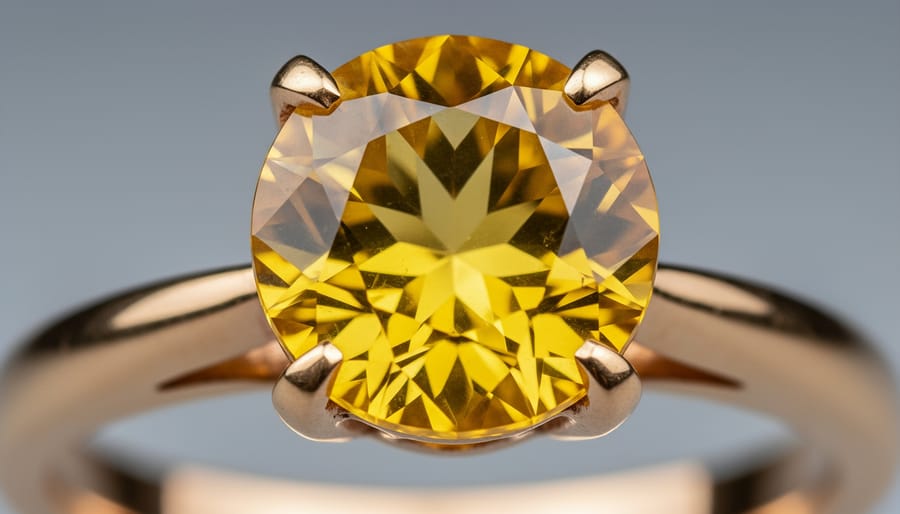
American culture adopted yellow gemstones as symbols of optimism and success during the Gilded Age. Yellow diamonds gained particular prominence in contemporary American jewelry as engagement stones representing joy and partnership rather than the traditional associations with wealth alone. The famous Tiffany Yellow Diamond exemplifies this shift toward celebrating these stones as artistic treasures rather than purely status symbols.
Middle Eastern traditions view yellow sapphires and golden beryl as stones of prosperity and divine favor. In Persian culture, yellow gemstones adorned royal regalia and religious artifacts, their color echoing the sacred significance of gold in Islamic art and architecture. Merchants in historical trading centers like Istanbul and Cairo prized honey-colored amber from Baltic sources, integrating these stones into decorative inlay work and ceremonial objects.
Contemporary Western interpretations focus on yellow gemstones as representations of creativity, confidence, and emotional warmth. Interior designers incorporate citrine and yellow topaz into luxury spaces to evoke sunlight and openness, bridging historical symbolism with modern aesthetic values.
Indigenous and Regional Customs
Baltic amber holds profound cultural significance in Lithuania, Latvia, Estonia, and Poland, where it has been treasured for over 6,000 years. Local communities traditionally viewed this fossilized resin as “gold of the north,” believing it possessed protective properties and healing powers. Amber jewelry remains central to folk ceremonies and is often passed down through generations as a family heirloom. Fishermen and coastal communities historically collected amber from Baltic shores, developing intricate knowledge of its formation and properties that predates modern gemology.
In West African traditions, particularly among Yoruba and Akan peoples, golden-yellow beads and stones represent wealth, spiritual power, and social status. Chiefs and traditional leaders wear yellow glass beads and amber during ceremonies, with specific colors and patterns conveying lineage and authority. Some communities associate yellow stones with solar energy and divine blessings, incorporating them into ritual objects and ceremonial regalia.
Australian Aboriginal cultures value golden ochre and yellow minerals for ceremonial body painting and rock art, though these materials differ from transparent gemstones. The pigments carry ancestral stories and connect participants to country and Dreamtime narratives.
Andean cultures in Peru and Bolivia have historically used golden pyrite and yellow minerals in ceremonial contexts, associating them with Inti, the sun deity. These materials appear in pre-Columbian artifacts and continue to hold symbolic meaning in contemporary indigenous practices, representing celestial power and agricultural abundance.
How Regional Gemstone Trading Works
Yellow gemstones follow established trade routes that connect mining regions with global markets through a network of specialized processors, traders, and authentication centers. Understanding this flow helps explain both pricing structures and quality assurance in the industry.
Most yellow gemstones begin their journey in concentrated mining regions. Brazil supplies the majority of citrine and significant quantities of imperial topaz, while yellow diamonds come primarily from South Africa, Australia, and Canada. Sri Lanka remains a major source for yellow sapphires, alongside deposits in Madagascar and Thailand. Amber moves through Baltic states, particularly Poland and Lithuania, where coastal deposits yield material that has traveled these same trade paths for millennia.
Raw stones travel to established cutting centers where skilled artisans maximize both brilliance and yield. Jaipur handles enormous volumes of citrine and colored sapphires. Bangkok processes yellow sapphires and topaz for Asian markets. Antwerp, historically dominant in diamond cutting, maintains specialized yellow diamond operations. These centers developed over generations, building concentrated expertise in specific stone types.
From cutting centers, finished gems move to trading hubs. Hong Kong serves as the primary gateway for Asian markets, hosting regular gem shows where dealers examine inventory under controlled lighting. New York’s diamond district remains central to North American trade, while Dubai has emerged as a critical Middle East hub, particularly for yellow sapphires moving between Asian sources and Western buyers.
Authentication occurs at multiple points through independent gemological laboratories. The Gemological Institute of America (GIA), Swiss Gemmological Institute (SSEF), and Asian laboratories issue certificates detailing a stone’s characteristics, treatments, and origin when determinable. These reports travel with the stone, establishing provenance and justifying pricing. For higher-value yellow diamonds and sapphires, certification is essentially mandatory in legitimate trade channels.
Treatment disclosure represents a critical aspect of this authentication. Heat-treated citrine (often starting as amethyst), irradiated yellow diamonds, and diffusion-treated yellow sapphires must be identified as such, significantly affecting market value. Reputable traders maintain this transparency through the supply chain, protecting buyers and preserving market integrity.
Applications in Architecture and Design
Yellow gemstones and their natural stone counterparts have carved out distinctive roles in high-end stone interior design where their warm luminosity adds both visual impact and material value. In residential settings, amber and honey-toned stones appear as carefully positioned accents rather than dominant surfaces, a deliberate strategy that maximizes their effect while managing cost. Luxury homes in Dubai, Singapore, and Monaco frequently incorporate yellow gemstone inlays in entry halls, where backlit amber panels or citrine-studded borders create immediate impressions without overwhelming the space.
Commercial applications lean heavily on durability and visual storytelling. Hotel lobbies use yellow marble and onyx with golden veining to echo the gemstone aesthetic at architectural scale, while actual gemstones appear in reception desks, elevator cabs, and private dining areas. The Burj Al Arab in Dubai exemplifies this approach, with gold-leaf detailing and amber-toned stone selections that reference traditional gemstone symbolism without literal gem application. Jewelers and luxury retailers deploy yellow sapphire and citrine directly in display cases and wall installations, turning the material itself into marketing.
Designers specify yellow natural stones for several practical applications:
- Flooring inlays with amber resin or yellow marble creating geometric patterns in entryways
- Wall accent panels using backlit honey onyx or golden travertine for dramatic lighting effects
- Countertop embellishments with citrine or topaz fragments set into resin or concrete surfaces
- Furniture details including yellow gemstone insets in tabletops, cabinet handles, and custom millwork
- Custom architectural features such as stair risers, column capitals, and water feature surrounds
The technical challenge lies in protecting softer yellow stones, amber scratches easily, citrine can fade in direct sunlight, while maintaining their visual presence. Architects achieve this through strategic placement (vertical rather than horizontal surfaces), protective resin coatings, and controlled lighting that enhances color without accelerating degradation. These stone-inspired masterpieces demonstrate how yellow gemstones bridge jewelry-scale craftsmanship and architectural ambition, particularly in cultural spaces where symbolic meaning amplifies aesthetic choice.
Common Questions About Yellow Gemstones

Buyers of yellow gemstones often encounter similar concerns about authenticity, value, and proper care. Understanding these practical aspects helps both collectors and designers make informed decisions when selecting stones for personal or professional use.
How can I tell if a yellow gemstone is natural?
Natural yellow gemstones typically show slight color variations and internal inclusions visible under magnification, while synthetic stones often appear too perfect with uniform coloration. A certified gemologist can use specialized equipment to examine crystal structure and trace elements that distinguish natural from lab-created or treated stones.
What factors make some yellow gemstones more valuable than others?
Color intensity and purity drive value, with vivid, evenly saturated yellows commanding higher prices than pale or brownish tones. Rarity, size, clarity, and cut quality also affect value, as does the specific gemstone type, natural yellow diamonds and untreated yellow sapphires typically rank among the most valuable.
Do yellow gemstones require special care?
Most yellow gemstones need only gentle cleaning with mild soap and water, though softer stones like amber and opal require extra caution to avoid scratches. Store pieces separately to prevent harder stones from damaging softer ones, and remove jewelry during activities involving chemicals or physical impact.
Are there sustainable sourcing options for yellow gemstones?
Several suppliers now offer yellow gemstones certified through responsible mining programs that prioritize environmental protection and fair labor practices. Lab-created yellow sapphires and other synthetic stones provide conflict-free alternatives with identical chemical properties to natural specimens, while recycled or estate stones offer another sustainable option.
Authentication becomes particularly important in markets where treatments are common. Heat treatment can enhance the color of citrine and topaz, and while these processes are widely accepted, disclosure ensures transparency. For high-value purchases, request documentation from recognized gemological laboratories that detail any treatments and confirm the stone’s identity.
Caring for yellow gemstones properly extends their beauty across generations. Citrine and yellow sapphire, both durable stones, withstand daily wear well. Amber and softer materials need gentler handling, making them better suited for occasional pieces rather than everyday rings. Regular inspections of settings help catch loose stones before they’re lost, especially important for valuable yellow diamonds or sapphires in prong settings.
Yellow gemstones have maintained their position in human culture for thousands of years, bridging geological wonder with cultural meaning. From the crystalline precision of yellow diamonds to the organic warmth of Baltic amber, these stones represent both natural beauty and human craftsmanship refined through generations of cutting, trading, and design expertise.
The regional trading networks that move these materials from mining sites to markets demonstrate the global appreciation for yellow stones. Whether it’s citrine from Brazilian deposits, imperial topaz from Ouro Preto, or yellow sapphires from Sri Lankan mines, each stone carries both its geological provenance and the cultural associations built around it. These trading patterns connect local traditions with international markets, creating value systems that recognize both rarity and meaning.
In contemporary architecture and design, yellow gemstones continue to serve dual purposes. They function as luxury materials in high-end residential projects while maintaining their symbolic roles in cultural practices. A designer selecting citrine for an inlay project engages with the same material that has represented prosperity in Chinese tradition and solar energy in Western symbolism.
Understanding yellow gemstones means recognizing them as part of the broader natural stone category, materials shaped by geological processes and human culture alike. Whether you’re evaluating them for design applications or appreciating their cultural significance, these stones reward informed selection with lasting beauty and meaningful connection to both natural processes and human tradition.